What is “Access Intimacy” and how can we provide access beyond checklists?
Inaugural event of the Disability Studies lecture series of the Institute for Art Theory and Cultural Studies in collaboration with the Institute of Fine Arts at the Academy of Fine Arts Vienna. Organized in the academic year 2026/27 in association with the courses led by Eva Egermann and Bernd Oppl, Institute of Fine Arts.
Led by activist Eva Rottensteiner, this workshop will examine “access intimacy”—a concept developed by Mia Mingus, a queer disabled woman of colour—which describes a form of intimacy that arises when someone else “gets” one’s access needs and considers them actively. We will explore how this concept could help us to broaden our understanding of access, care and interdependence in more detail through interactive elements, and how we can make access a collective practice in academia and in our everyday lives. This workshop is organized on the occasion of the exhibition Blood and Coffee, curated by Mariana Lemos and Marianne Vlaschits at the Exhibit Gallery of the Academy of Fine Arts Vienna on view from 13.11.2026–14.2.2027, which brings together local and international artists working across disability, illness, embodiment and disembodiment.
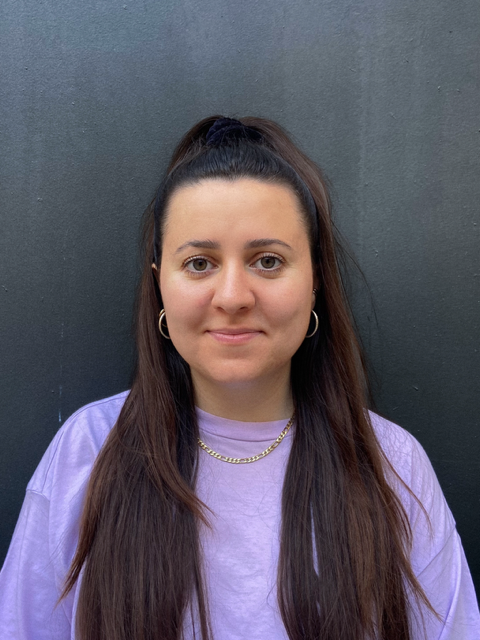
Eva Rottensteiner (she/her) works in communications for disability rights. She studies politics and gender studies and defines herself as a woman with disabilities.
About the Disability Studies lecture series in academic year 2026/27:
Artists with disabilities challenge conventions in the arts, create new spaces and discourses, address and reflect on ableist norms and frameworks, influence representation and aesthetics, and open up new perspectives on perception, communication, and belonging. Disability Studies is considered a transdisciplinary field of research that develops new knowledges that go beyond traditional discourses on disability. It also involves identifying social practices of exclusion and inequality and working toward changing them. Organized within the framework of the courses “Crip Theory & Artistic Practice” by Eva Egermann and “EveryBody: An Introduction to Critical Disability Studies, Crip Culture, and Inclusive Practices from Situated Perspectives” by Bernd Oppl, the contributions in this series reflect the diversity of discourses, practices, and interdisciplinarity—ranging from an engagement with individual access needs (“Access Intimacy”) to global social conditions of inequality.
This event will take place in person and online. Please contact Alena Williams in advance at ikw_barrierefreiheit@akbild.ac.at to register for online attendance (until 11. December 2026) as well as any need for sign language or speech-to-text interpreting (until 4. December 2026), or if you have specific questions regarding accessibility.
ACCESS INFORMATION
Overview of Barrier-free Access to Akademie Locations
LANGUAGE
Spoken English
MOBILITY (Schillerplatz 3, 1010 Wien
Accessible entrance via Makartgasse:
- Ramp and automatic door
- Elevators with wheelchair-accessible controls
- Wheelchair accessible restrooms on every floor
VISUAL ACCESSIBILITY
Tactile guidance system from Schillerplatz entrance to porter desk
HEARING ACCESSIBILITY
induction loop available
VENUE ASSISTANCE
Porter available for support and access assistance