Art and Image | Graphics
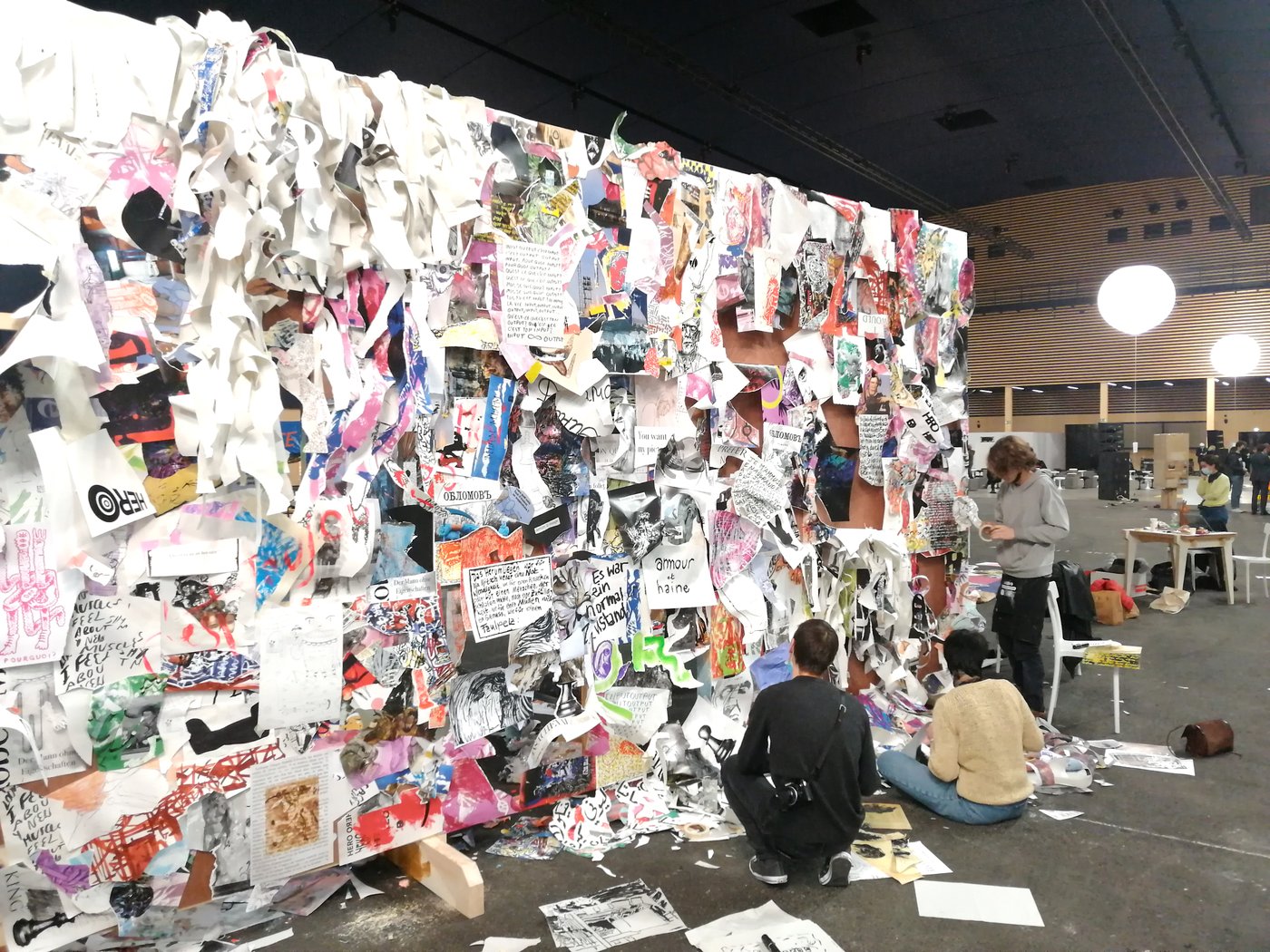
The Graphic Arts Department is a space for free artistic practice. It focuses on the production, reception, reproduction, and analysis of images. As a central interface between idea, image, material, and reproduction, graphic arts combine direct artistic practice with a critical examination of how images are created, altered, reproduced, and perceived.
The goal of the program is to develop independent and autonomous artistic thinking and practice. We learn to formulate, test, discard, and further develop ideas, while striving to establish our own artistic practice.
We explore and practice techniques, theories, and approaches in contemporary art, examining them through graphic means. At the same time, we learn from the images, ideas, and practices of past art and translate these experiences into new images.
Sketches and drawings often serve as the starting point: the simplest and most direct way to create images, and at the same time a fundamental form of thinking, observing, developing, and communicating. They facilitate precise observation and capture fleeting ideas. Through them, concepts are tested, ideas are developed, and others are discarded. From sketches and notes to complex visual and spatial works, the department views graphic art as an open-ended tool that facilitates connections to painting, printmaking, sculpture, installation, architecture, literature, philosophy, and music. We place particular emphasis on analyzing and practicing image-making and worldviews.
As a point of intersection, graphic art occupies a special position within the arts. Its methods are therefore always effective in connection with other fields of art. In particular, its proximity to painting and image development—based on line, plane, structure, and composition—is often central.
We work particularly closely with the printmaking studios. This allows us to experiment with a wide variety of printmaking techniques. Joint projects and editions emerge, and we discuss why contemporary images are considered originals and why they are considered reproductions. We work with lithography, etching, woodcut, linocut, and screen printing, drawing on the expertise of the printmaking studios. In addition, we expand upon traditional printmaking techniques by incorporating experimental and contemporary printing methods, as well as digital imaging and reproduction techniques. We view editions and reproduction as an independent artistic practice and explore them through collaborative projects.
We see ourselves as an open space for experimentation, where focused work has just as much a place as exchange, discussion, and collaborative exploration. Successful and failed attempts are equally part of the learning process. As a cohesive social structure, we learn from one another, help one another, and take a critical look at our own work and the work of others, with the goal of creating art for our time.
- Name
- Mag. Theresa Eipeldauer
- t.eipeldauer@akbild.ac.at
- Name
- Mag.art. Philip Patkowitsch
- Phone
- + 43 (1) 58816 - 6212
- p.patkowitsch@akbild.ac.at