Martius Revisited. A collaborative counter-archiving project between Brazil and Germany
Project presentation with Frauke Zabel, artist, and Laura Kemmer, urban researcher, followed by a discussion. Part of the Gender Studies lecture series by Elke Gaugele and Elke Krasny.
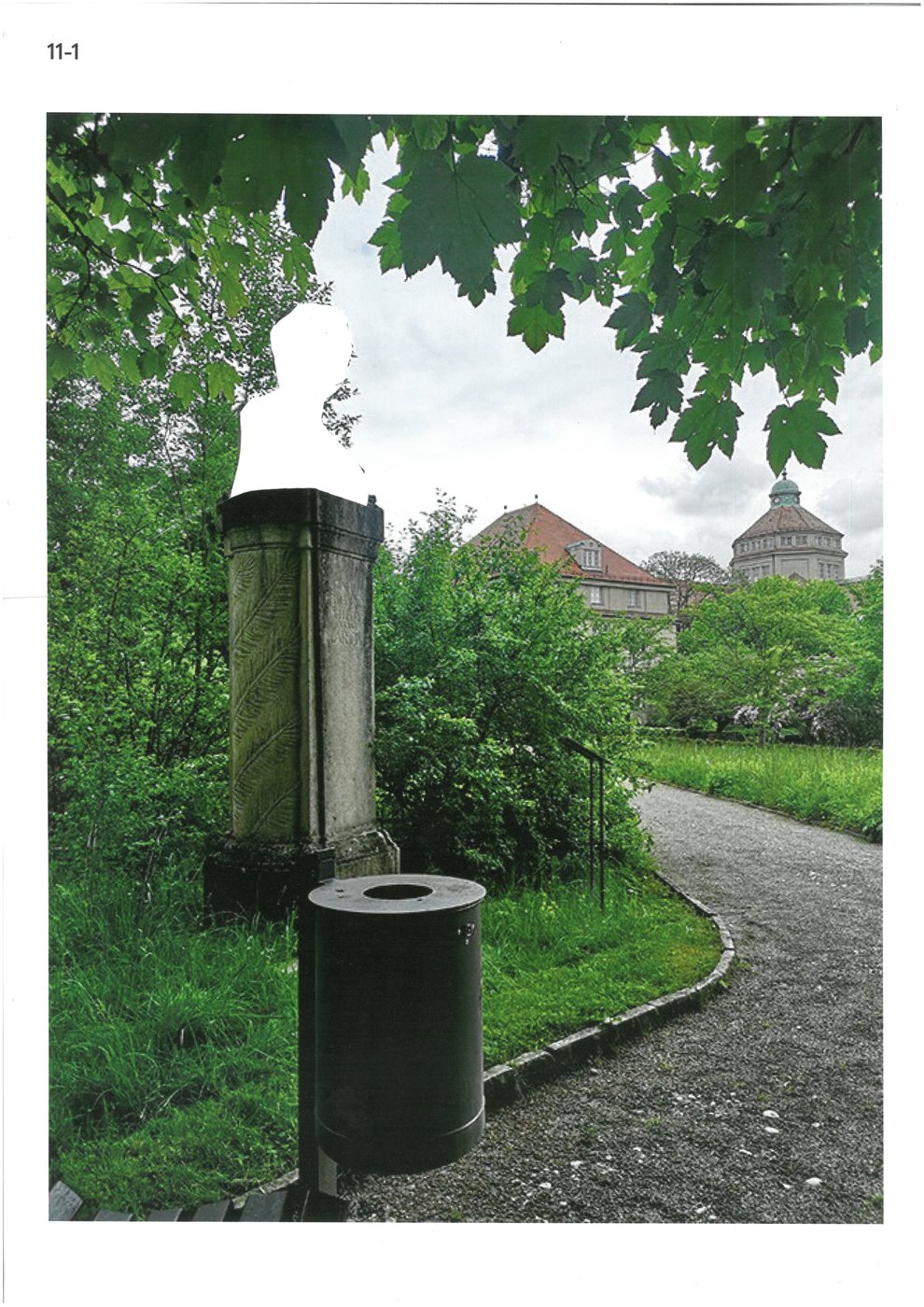
The 19th-century journey to Brazil by natural scientists Carl Friedrich Philipp von Martius and Johann Baptist von Spix produced systems of knowledge that continue to structure ecological, cultural, and political imaginations between Brazil and Europe to this day. Martius Revisited takes this legacy as its starting point to renegotiate archives, collections, and research as historically grown power structures.
In a collaborative dialogue between Munich and São Paulo, Martius Revisited explores a search for traces in public space, using artistic and research methods such as city walks, storytelling, and mapping as practices of counter-archiving. The methods aim to open up spaces in order to reveal, through shifts in perspective and dialogue, the gaps, omissions, and epistemic violence that continue to shape our view of nature and culture to this day.
Following a series of workshops and a symposium at the University of São Paulo, the project brings together contributions from indigenous authors, artists, scientists, and students in a zine. The contributions create a polyphonic structure that opposes closed narratives. Martius Revisited sees itself as an ongoing practice of counter-archiving and an open constellation, developing an outlook on questions of healing and reparation in dealing with colonial collections — from decidedly decolonial and feminist perspectives.
Frauke Zabel is an artist and art educator. She has been teaching in the Department of Art and Design at the University of Art and Design Linz since 2026. In Frauke Zabel's practice, artistic research, media transfer processes, education, and public appearance go hand in hand. She aligns her media-open and often collaborative working method to the occasion of going public. Her research-based approach has developed into a practice that addresses her own perspective as well as the researched content in a social, political, and ecological reality. She is currently coordinating the project “Atlas Brasiliensis – a counter-narrative of the Rainforests” with artist Anita Ekman (Goethe-Institut São Paulo) and indigenous anthropologist João Paulo Tukano (UFAM Manaus). In collaboration with Ivan Barreto, Carla Sarmento Fernandes, Janine Castro Fontes (Bahserikowi – Indigenous Medical Center Manaus), Laura Kemmer (USP São Paulo), and Freg Stokes (Max Planck Institute for Geoanthropology), the project examines the colonial conception of the Amazon rainforest, its inhabitants, and the accompanying image production that was shaped by German explorers in the 19th and early 20th centuries.
Laura Kemmer is the holder of the Martius Chair for German-Brazilian Human Sciences and Sustainability (DAAD) at the University of São Paulo. Laura works at the intersection of urban anthropology, geography, and environmental humanities on planetary health/healing, repair/reparation, and human-environment relationships in urban centers between Brazil and Germany. Current publications: “Kartographien des Verborgenen” (Dérive No. 102/2026); “Urban Critical Zones as a Problem of Coexistence” (Berghahn, forthcoming), Planetability (forthcoming 03/2026, Berlin Universities Publishing & USP Institute of Advanced Studies). Her research projects have given rise to collaborative exhibition formats and critical practices, such as “Riparian Struggles: Reading the Sediments” (Museu das Culturas Indígenas, São Paulo), "Letters to the Saracura: Tactical Listening” (with Lucio Telles, Goethe-Institut Rio de Janeiro, Campus Anthropocene Latin America, Rio de Janeiro), “Planetary Design: Reclaiming Futures” (Spore Initiative Berlin); as well as the seminar and conference series Martius Revisited I-III (USP, DWIH São Paulo, among others).