Musical Instruments as a Subject of Knowledge: Body and Animality
Dissertation project
led by Camila Sposati, Institute for Art Theory and Cultural Studies
Project start: 16.03.2020
Abstract
Can a musical instrument be a subject of knowledge? Informed by the work of French art theorist Hubert Damisch, this dissertation explores the epistemological, ontological, and theoretical possibility of two wind instruments by approaching them as subjects of knowledge. In dialogue with Brazilian anthropologist Eduardo Viveiros de Castro’s conception of perspectivism and controlled equivocation, it mobilizes a new analytical means for understanding the ways that such instruments’ formal structure exceeds their immediate contexts by displacing the observer’s perspective with their own.
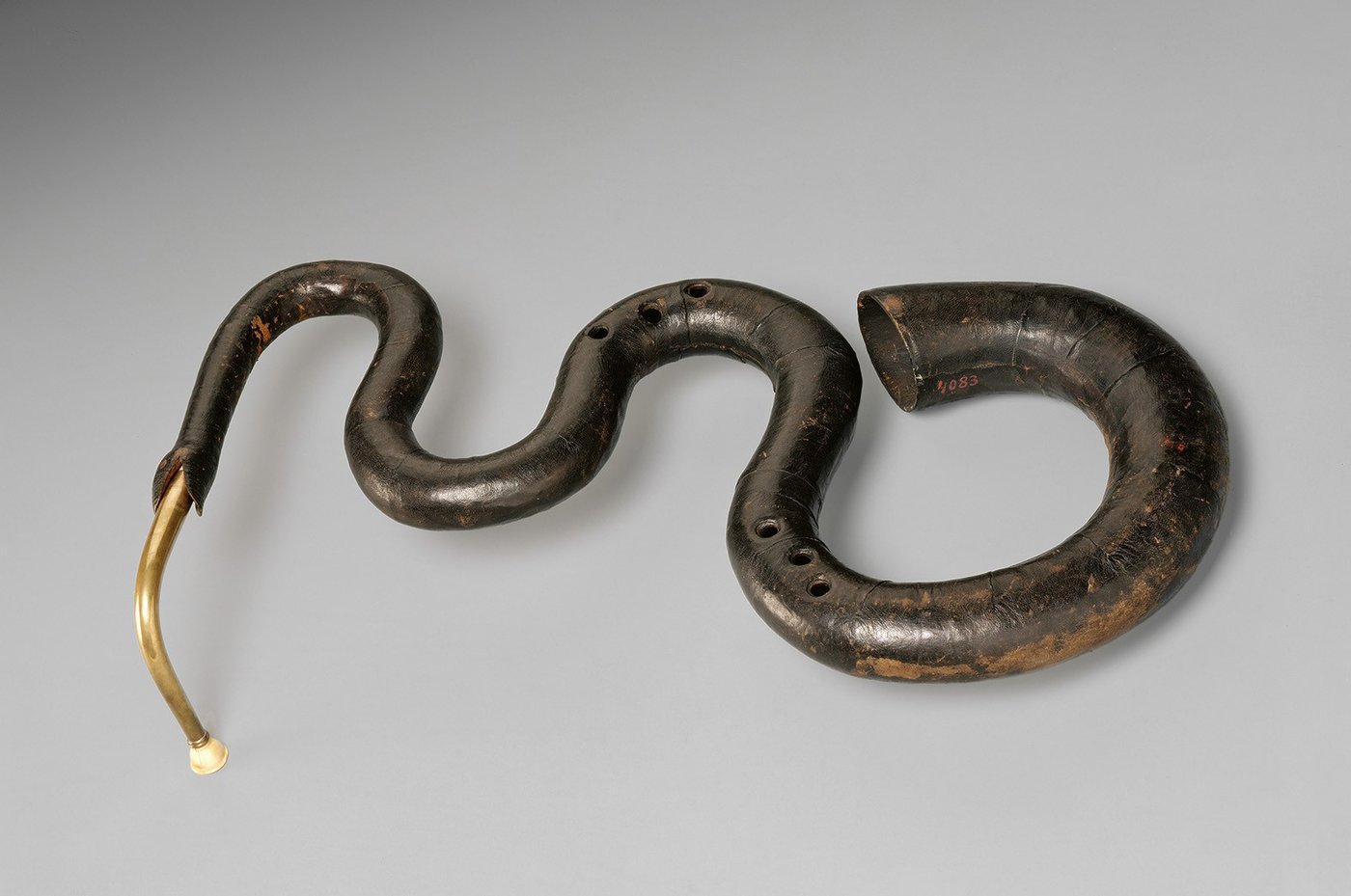
Focusing on examples currently held in Vienna, this study draws attention to two instruments historically and culturally distinct in their materiality and affective force. The Serpent, a sixteenth-century European wind instrument, belongs to the Collection of Historic Musical Instruments at the Kunsthistorisches Museum and has been documented in its inventory since at least 1665. The Yurupari, an Indigenous wind instrument from northwestern Amazonia, has been held at the Weltmuseum Wien since 1973. Classified differently within museum systems—one as a musical instrument, the other as an ethnographic artifact—both are reexamined in this dissertation through a series of conceptual shifts. Engaging art theory, social anthropology, organology, musicology, and the history of science, the study allows theoretical reflection to arise in response to the instruments’ material, cultural, and sensorial presence.
Keywords: musical instruments, animality, embodiment, cross-cultural thought, museum display
Short biography
Camila Sposati is a visual artist and researcher born in São Paulo (Brazil). She holds a Master's degree in Fine Arts from Goldsmiths College, London. She published by Revolver (Berlin) the book Stone Theatre (2016). Since 2020, She is a Ph.D. candidate in Philosophy candidate at the Institute for Art Theory and Cultural Studies at Akademie der bildenden Künste Wien.