Design in Context - Exhibition
Exhibition of student works created at the Design in Context program at the Institute for Education in the Arts.
Amphorea
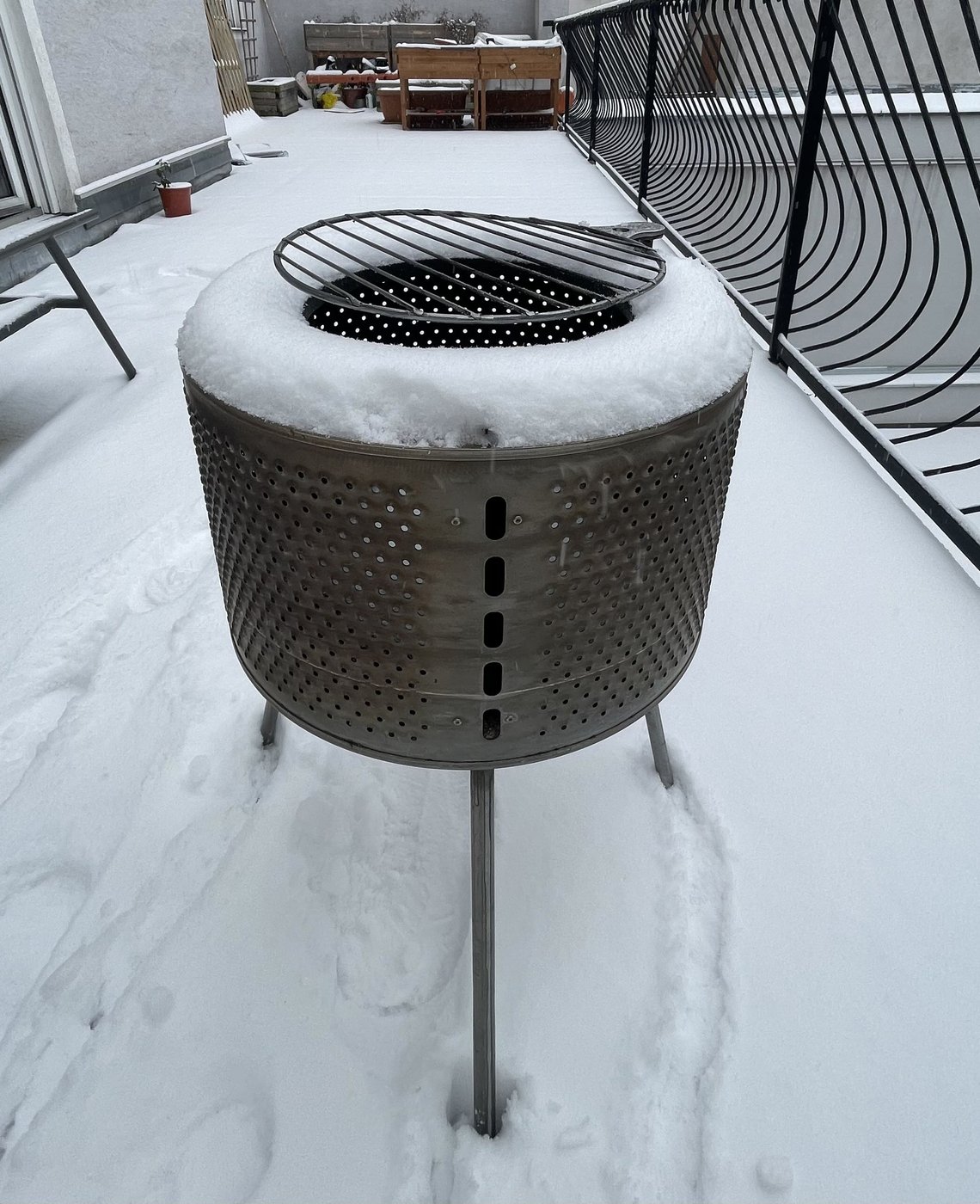
Exhibition of student works developed in the course Production Techniques: Mold Making|Ceramics with Lilith Matthews.
In this course, the students encounter the material for the first time in the ceramics section. They learn about the methods of handbuilding, some design options for the surface aswell as choosing the necessary technology and the right material depending on form and function.
After the rough construction and finishing was completed, it was covered using an engobe, some with stencils, and then particular glazed on the inside. The workpieces were constructed almost entirely by hand with the help of a few tools. The students design their own shape and decor.
Participating Students:
Susanna Höllrigl, Maxim Reif, Valentina Schmidt, Marlo Pillwein, Rosalie Maxima Maier
In search of structure – experiments with rings
Students present simple jewelry developed in Dieter Gorjanz’s open workshop – metal.
The production of the jewelry serves as an exercise in the technique of brazing. The surface design is created by molding industrial and natural surfaces and using tarnish colors.
Participating students:
Raphaela Bock, Lorenz Burkhart, Julia Hovorka, Erisa Mir Kazemi, Mila Kocher, Isabella Neuriesser, Lina Pöschko, Sonia Schorling, Anna Szantai, Tabea Wolf, Maya Zwatz
Bachelor's projects from the Department of Design in Context
Exhibition of the final undergraduate design projects developed as part of the Fashion/Styles/Identities course taught by Kathrin Lugbauer and as part of Produkt/Design/Konsum taught by Peter Spitaler.
David Eisner presents a costume design conceived and created for the play Blood Reign (premiering in September 2025 in Zurich). The work deals with the aesthetic, theoretical, and symbolic interweaving of vampirism, queer perspectives, and decolonial approaches. The vampiric body is staged as a fluid figure making visible power, desire, and deviation. The costume design is a form of creative research into how alternative conceptions of the vampiric, the undead can be represented and embodied on stage.
Luca Ruhri presents Back Pain Fabrics, a work that deals with scoliosis and its creative translation into a fashion collection. The starting point is personal experience with the condition, which serves as a critical impetus for examining standard body types, deviations, and their social perception.
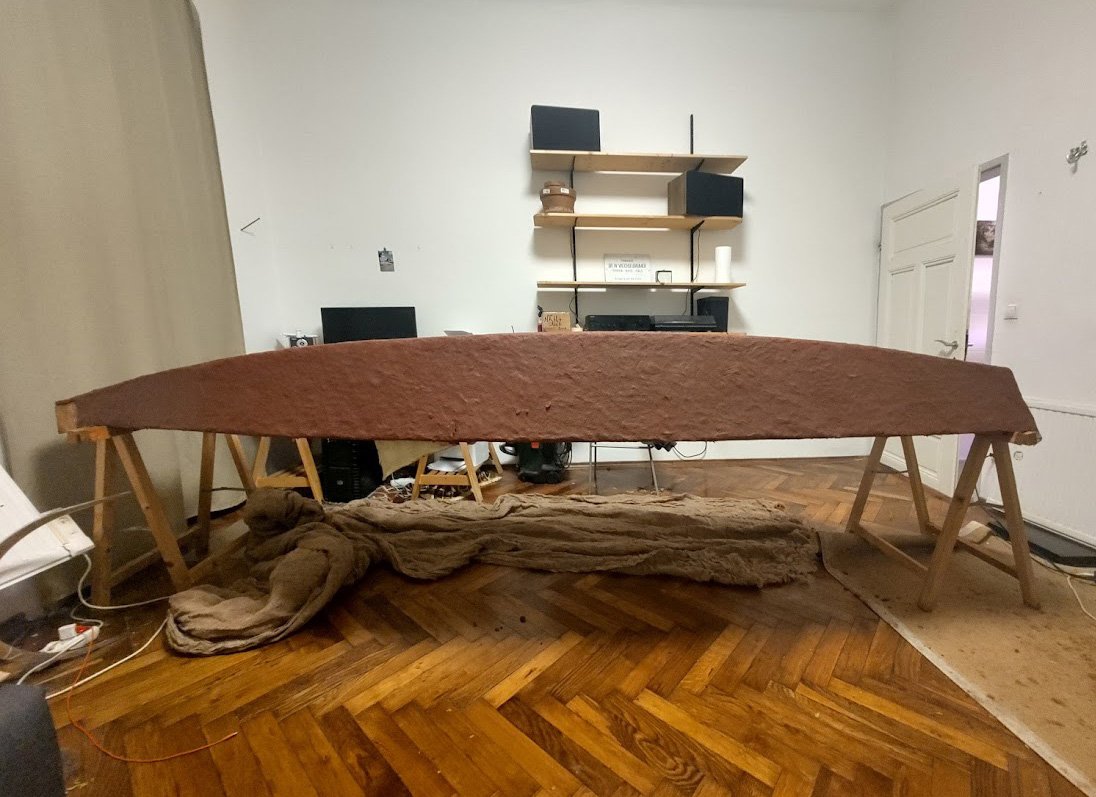
Martin Weichselbaumer presents A Boat for the Apocalypse or The Search for the Fireflies
The prototype addresses questions such as: What happens when a flood sweeps a small boat away? Will it survive the waters? Or will it shatter against the uncontrollable force of the water? What happens to the boat that remains undiscovered, stranded in the current? Will it become a part of our nature, or an artifact of plastic slowly breaking down and entering our bodies? Is it possible to build a boat entirely from natural materials? Is there glue that is both natural and waterproof? Can linoleum be made by hand, and can it replace fiberglass? Do you always have to use screws, or how was it done in the past? Why were linen and linseed oil part of historical boats?
Connecting Threads_Teaching Formats for Design and Crafting Methods
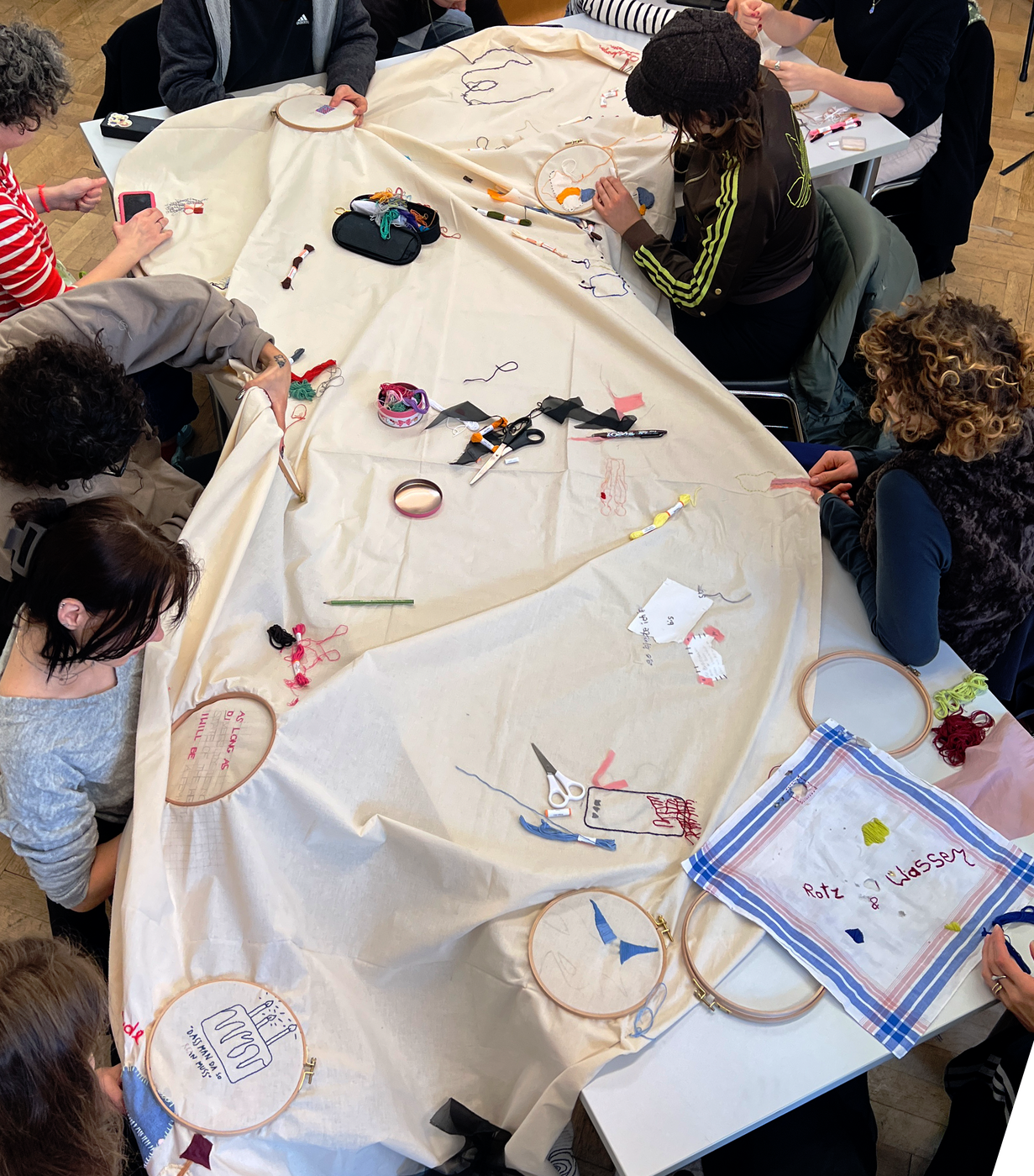
In this course by Anna Menecia Antenete Hambira, students engage theoretically and artistically with the traditionally female-connoted textile practice of hand embroidery.
Appropriating, critical decolonial reflection, and transmitting knowledge in relation to the sociocultural and sociopolitical history and present of hand embroidery were just as much a part of the course as learning and teaching the textile art technique. Students explored the needle as a powerful tool used by globally active activist groups and individuals who, artistically, give visibility, tactility, and experientiality to their own narratives. In that way, they claim a place in the male-dominated, white-dominated historical canon and collectively create space for connection, healing, emancipation, and resistance.
Participating Students:
Judith Lamberger, Lorenz Benedikt Burkhart, Anna Diana Mätzler, Anna Bauer, Susanna Aimée Höllrigl, Nicole Brandstaetter, Rosa Nella Landa, Judith Gebert, Hanna Saurer, Marlo Pillwein, Maria Valentina Schmidt, Nina Teix, Josi Hipp, Olivia Gründler
Design in Process
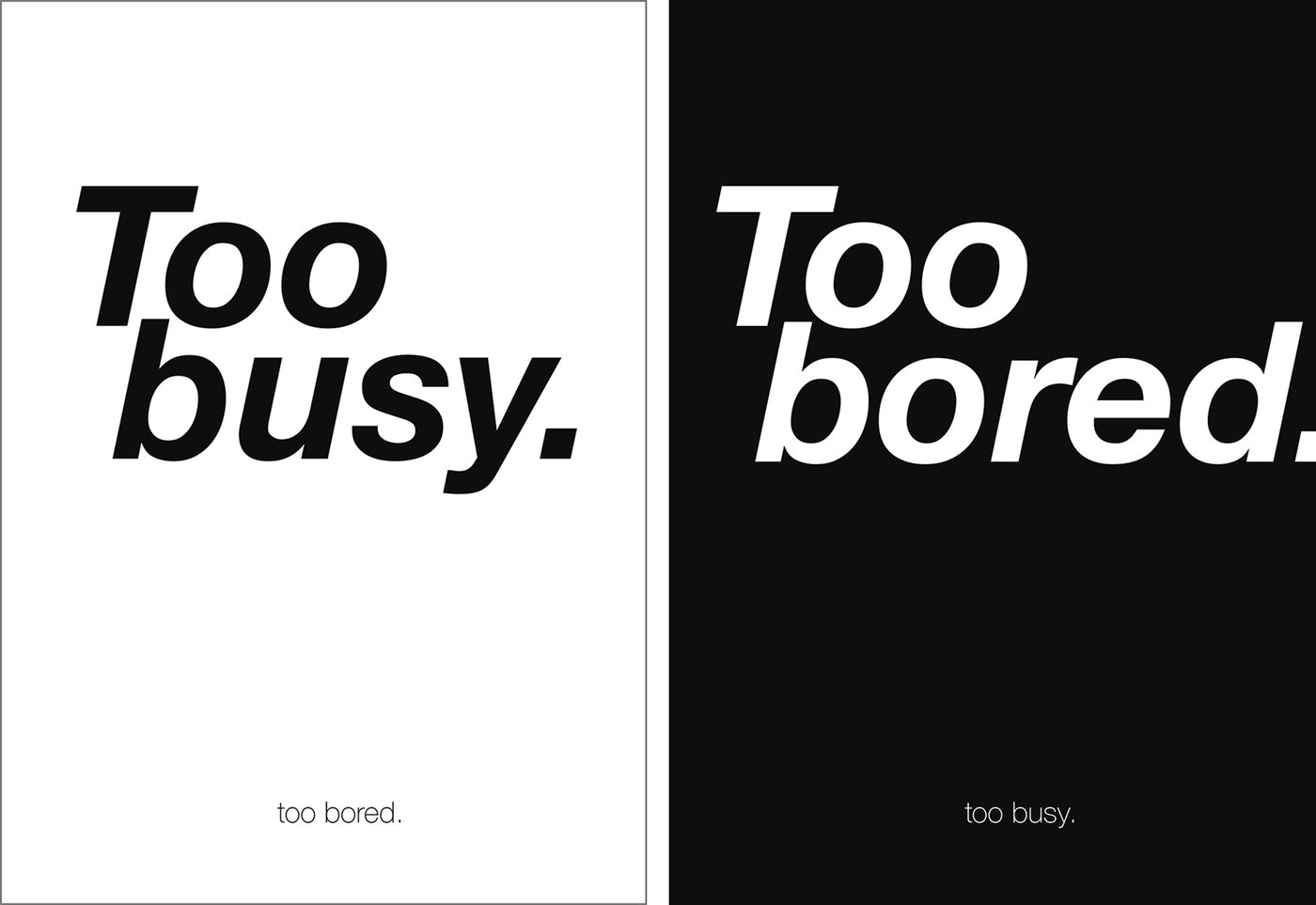
Poster series from the conceptual phase of the design projects by master’s students in Design in Context. Supervised by Martin Beck and Valerie Lange.
The exhibition presents posters from the design development phase of the master’s projects in Design in Context. The poster series uses word collections to illustrate the project contextualization on which the students’ work is based. The completed projects will be exhibited during the Parcours event in the summer semester.
Participating Students:
Fiona Albrechtsberger, Johannes Baluch, Sarah Fichtinger, Lea Gander, Andrea Kozuchova, Lea Langner, Maria Lici, Eva-Maria Meischl, Johannes Oberhuber, Julija Schener, Johannes Staudenbauer
Colour · Form · Material
Textile printing experiments by students from the course Extension/Printing Technology with Ulli Nöbauer.
The works on view explore the diverse creative possibilities of textile printing. The focus is on screen printing on fabric and its potential for variation through the combination of different materials, textiles, colors and printing pastes. The prints on display explore the interplay of motif, material and technique, with textiles functioning as an active component of the design.
Participating Students:
Participants:Clara Becker, Viktoria Böhm, Emma Ganneval, Clarissa Handl, Lina Pöschko, Hanna Saurer, Julija Schener, Stefanie Sima, Sophie Tschannerl
Vessels and Objects
Exhibition of student works developed in the course Production Techniques: Mold Making|Ceramics with Felix Eselböck.
Students learn techniques and ways of working with plaster as a tool for reproducing ceramic vessels and objects. Rotationally symmetrical positive forms are created by hand using a template and then sanded; production molds are made from these forms to produce a vessel using the slip casting method. In the second exercise, a multi-part mold is made from a freely chosen object, and this object is reproduced in stoneware clay by using slip casting or pressing. The objects are then cleaned and glazed.
Participating Students:
Flatschacher Verena, Kircher Laura, Kirchgatterer Jana, Zoé Schwarz, Stosik Martin
Re-Designing Identity
Redesigning a classic dress shirt in dialogue with youth culture developed in the course
Fashions|Styles|Identities with Kathrin Lugbauer. Targeted interventions transform the classic garment into an individual piece with characteristic aesthetic features.
Starting from the pattern of a traditional men’s shirt, students develop a modified version that engages creatively with a chosen youth culture. Through at least three interventions—on the collar, the sleeves, and an additional freely chosen formal element such as darts, pleats, etc.—the shirt adopts gestures, rhythms, and postures of the chosen scene and becomes its manifesto. In this way, an everyday garment becomes the carrier of stories about freedom, belonging, and creative reinterpretation.
Participating Students:
Clara Becker, Charlotte Dahlkamp, Kristina-Magdalena Holocher-Ertl, Christina Huber, Aida Jakubovic, Marie Klinger, Johanna Löffl, Ida Romanowski, Elisabeth Claudia Schrödl, Stella Maria Schwaiger, Anna Szantai, Nora Topar
Objects and small furniture
Students present design and craft objects from the introductory course in the wood and metal workshop, supervised by Dieter Gorjanz, Barbara Rohner, and Peter Spitaler.
Participating students:
Lorenz Burkhart, Marina Fröhlich, Florian Jauernig, Fanny Ladstätter, Susanna Höllrigl, Nora Rieser
Open workshops – ceramics/mold making
In the Open Workshop course, students receive support for their individual ceramic and/or mold-making projects. Independent work on projects is encouraged. Techniques already learned in the basic course are reinforced through practice. Project planning and technical support for master projects also form a significant part of the course.
Participating Students:
Jennifer Petrik, Judith Gebert, Greistorfer Sophie
Plan Drawing – “We Have a Plan”
Exhibition of the course Technical Drawing taught by Herbert Peter from the Department of Design in Context.
“Having a plan” means not only putting scale drawings on a sheet of paper, but also documenting the implementation of an idea in its entirety with a focus on process. With the help of sketches, drawings, application models, and implementation strategies, plans for acoustic improvements for the IKL projects rooms are developed and presented using the necessary soft skills.
Participating Students:
Lorenz Burkhart, Andrea Kozuchova, Lydia Lindner, Ivy Ludwig, Maximilian Obermüller, Lara Paluselli, Simon Schirmer, Martina Wachte
Projects on technology and sustainability
Students present innovative projects from the Technology and Sustainability course supervised by Daniel Themessl. The focus is on real-world problems that are addressed through targeted use of technical applications and sustainable concepts.
The design and manufacturing processes reference the Design Thinking process, which is structured along clear phases with specific focal points. This methodical approach is particularly relevant for the school context, as it promotes key competencies and strengthens competency-oriented learning and the didactics of teaching of design and making.
Using digital manufacturing and rapid prototyping supports the development process. Through the integration of electronic components and physical computing, some projects became smart devices offering functional solutions to complex problems. The focus is on the sustainable design and making of products, their sustainable use, and the recyclability of all components at the end of their life cycle. This process-oriented methodology, combined with the theme of responsible design, enables students to experience independence and autonomy in their work and to take the experience they have gained with them into their own teaching activities.
Participating Students:
Isidora Dimitrijevic, Monika Gamillscheg, Lydia Lindner
Textile Masks or Soft, Stiched Faces
Exhibition of the course Sewing Techniques / Pattern Techniques taught by Christiane Gruber and Noushin Redjaian, from the Department of Design in Context
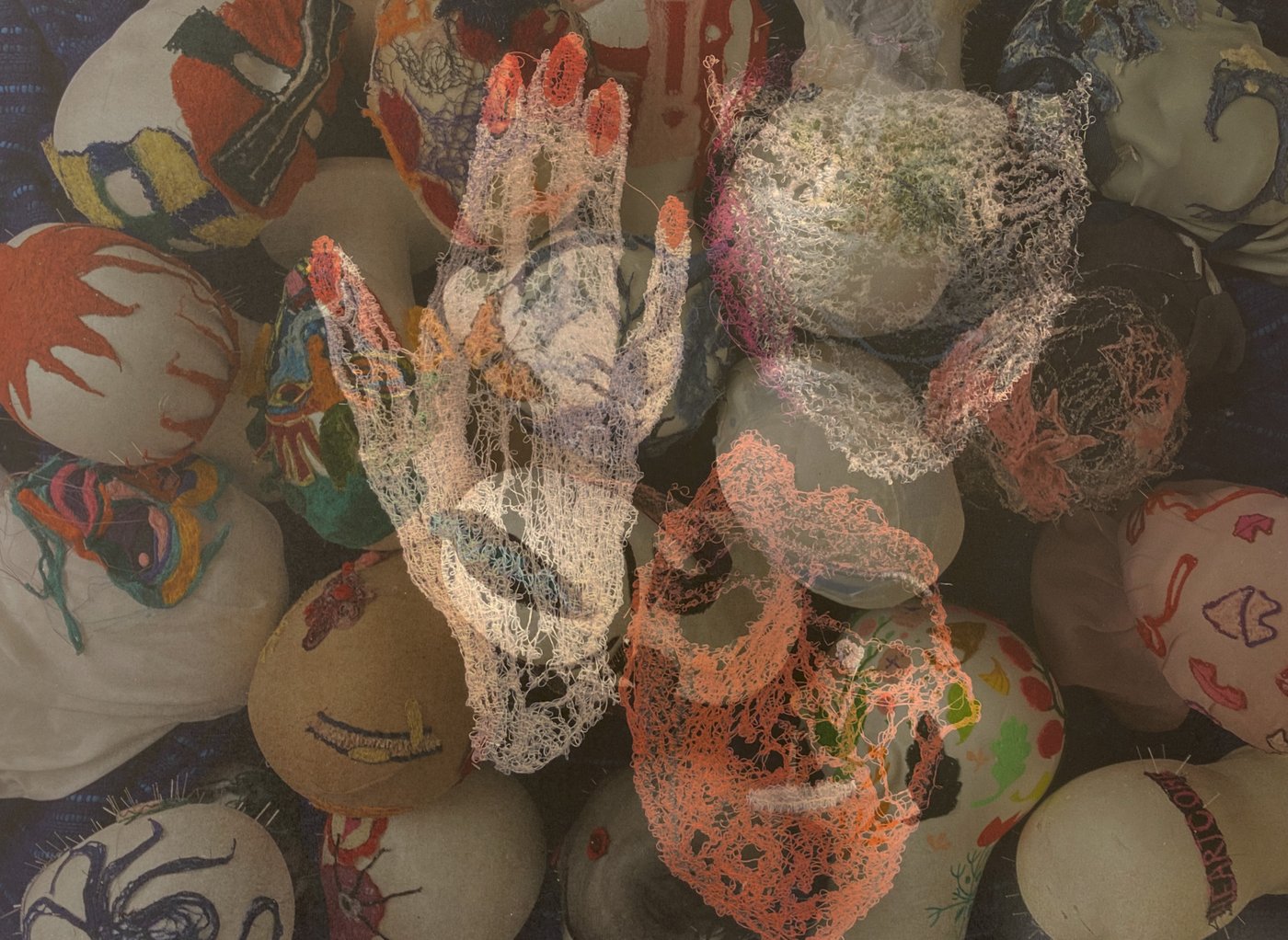
Machine-embroidered textile patches that make faces visible—much like tattoos—open up a multilayered field between craftsmanship, technology, and artistic expression. The curated textile masks and “soft, stitched faces” are machine-embroidered studies exploring sewing techniques, form-finding, and textile manipulation. The students tested, expanded, and refined their textile and craft-based skills.
The works embrace the tension between textile pedagogy and independent artistic-design expression. As experimental objects of study, they negotiate the materiality of textiles and their poetic and emotional potential: textiles as skin, imprint, trace, ornamental or performative extension of the body.
Starting from the concept of the mask, the crafted faces develop an individual yet open exploration of questions about head, face, adornment, and identity. They reveal how textile design methods—technical precision, material sensitivity, and artistic research—can interlock. Textile portraits emerge that, much like tattoos, carry traces, suggest stories, and question the interplay of surface, interior, and expression.
Participating Students:
Gruppe Gruber: Anna Bauer, Maja Froschauer Lotta Grafl, Johanna Kvas, Ana Lalic, Moritz Seeburger, Mame Khadey Seye, Lisa Sodin, Nina S. Teix.
Gruppe Redjaian: Emma Deyle, Samuel Gerber, Franziska Göttlicher, Saana Hergge, Ewa Kaja, Judith Lamberger, Rosalie Lorenz, Anna Möslinger, Tim Netzband, Stella Promintze
Typography & Layout I and II
Exhibition of student work developed within the courses Typography & Layout I and II taught by Martina Gaigg.
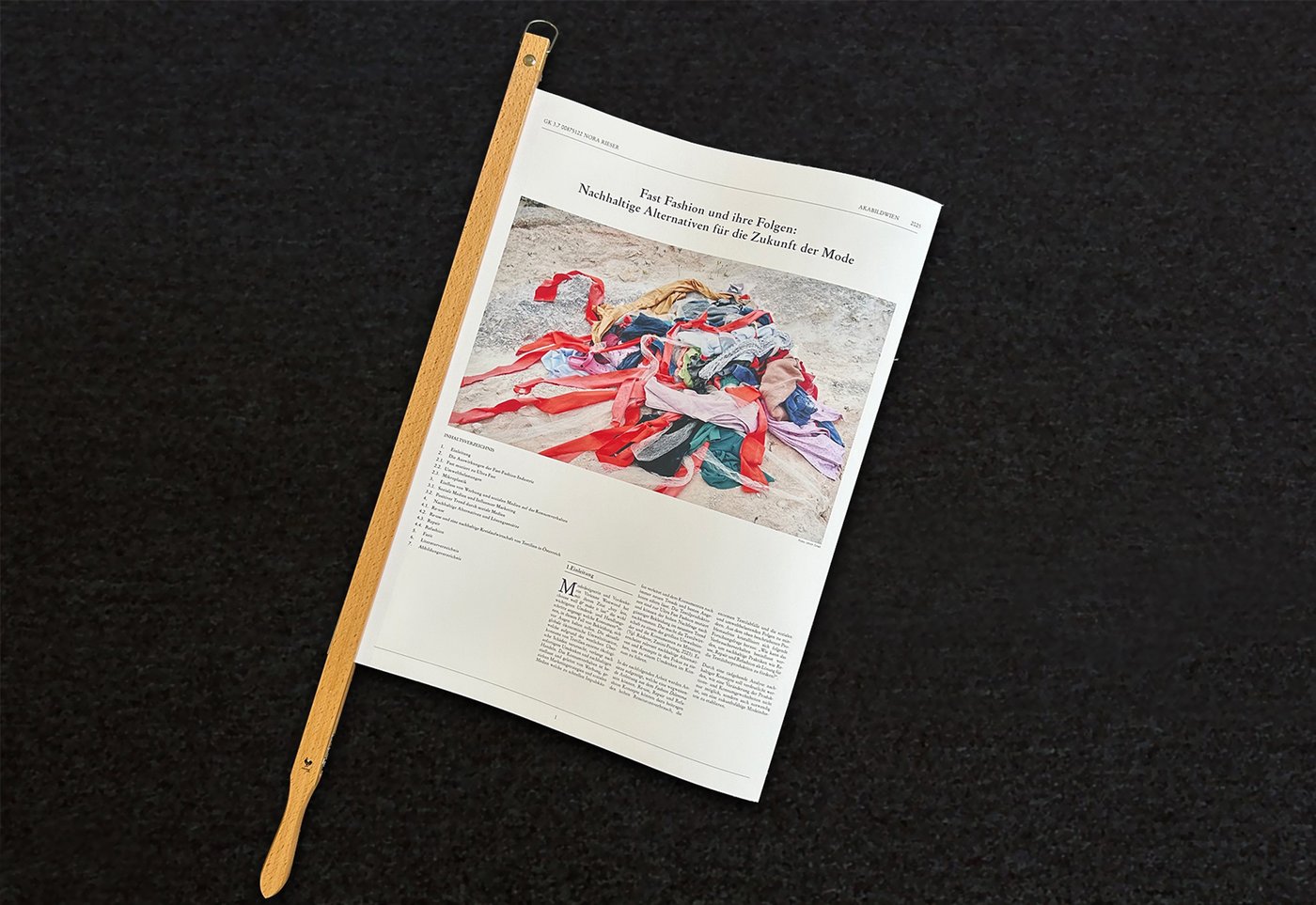
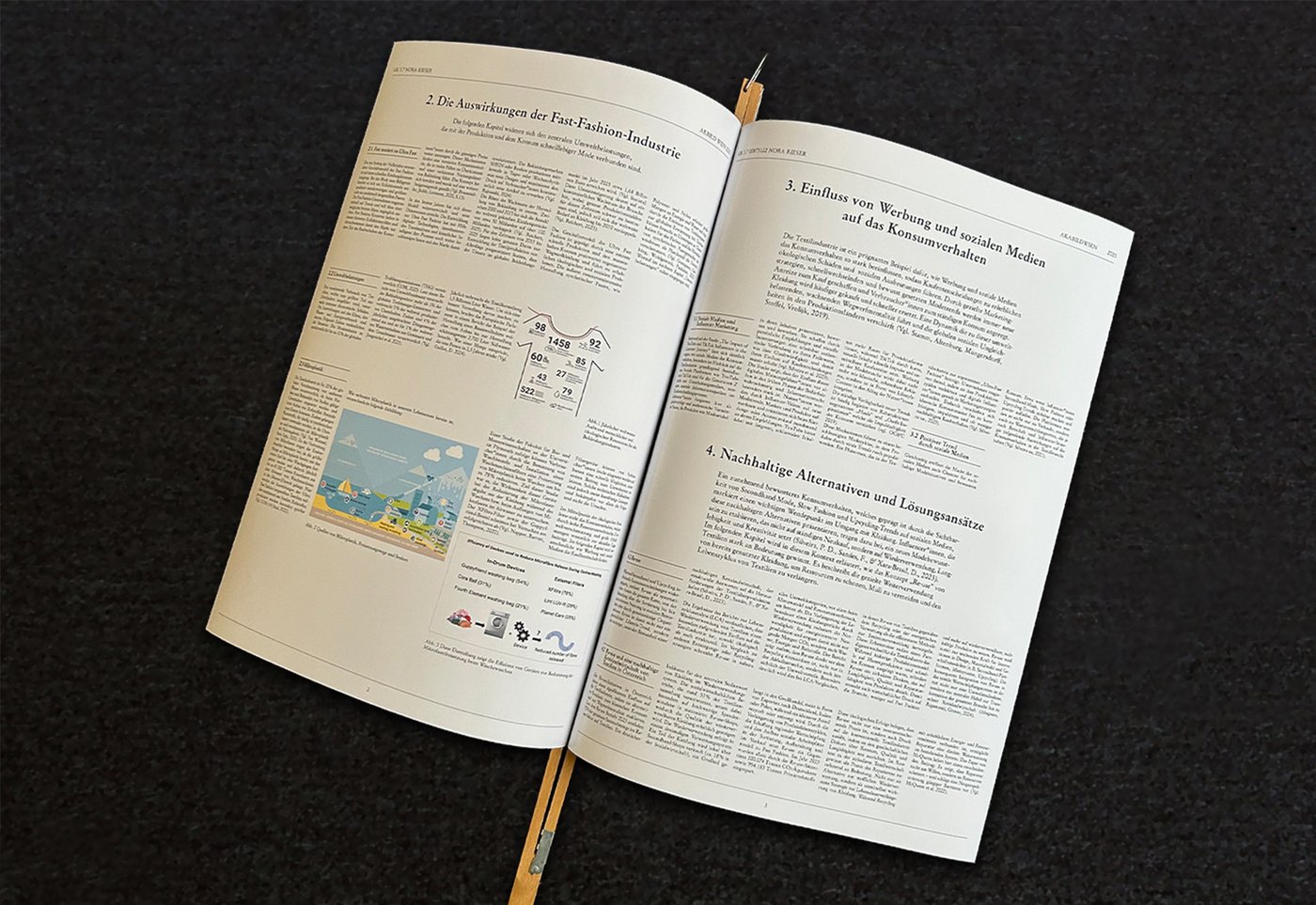
Students present their typography and layout projects: typographic posters, layouts for MA and BA theses as well as seminar papers, brochures, booklets, work instructions, recipe collections, and a newspaper.
Participating Students:
Rafaela Antosch, Clara Becker, Raphaela Bock, Virgil Bunka, Seza Enengl, Samuel Gerber, Valentin Koch, Dorina Lehdorfer, Selma Logar, Rosalie Lorenz, Carmen Luntzer, Paula Prodinger, Nora Rieser, Sidonie Sagmeister, Valentina Schmidt, Magdalena Schwarz, Moritz Seeburger, Jasmin Singer, Katharina Suttner, Anna Szantai, Sophie Tschannerl, Stefanie Weber
The availability of materials and fabrics
Design sketches and objects by participants in the course Textile Design Processes|Printing Techniques. Supervised by Lisa Niedermayr.
The projects present design sketches and objects on the theme of resources, with a particular focus on the availability of materials and fabrics. Questions relating to the material, social, monetary, and conceptual resources required for manufacturing products or meeting needs were addressed, as was the development of ideas for the forward-looking use of textile industry waste in the field of craft and design. Textile waste was examined for its potential for reuse, and the current status of challenges, innovative developments, and EU directives was discussed. The objects on display reflect ideas, goals, and visions, and are based on abstraction, humor, and memory.
Participating Students:
Stefanie Brazda, Charlotte Dahlkamp, Maja Froschauer, Samuel Gerersdorfer, Susanna Kastlunger, May Rabl, Nora Rieser, Marie Schepansky
From Point and Line to Plane – Plants as a Method of Design
Exhibition of a collective student work developed within the course Introduction to Methods of Design, taught by Noushin Redjaian.
The starting point of the semester was Wassily Kandinsky’s text Point and Line to Plane, serving as a fundamental exploration of formal elements and their relationships. Building on these principles of design, the line was understood
not only as a drawing tool, but as a trace of movement and growth. These considerations were translated into a material-based process in which each student selected a plant whose structures and characteristics served as the basis for design decisions. The plant was approached as a living system – as a line in space, as condensation, and as surface.
In the practical phase, students worked with textile techniques, in this case Shibori dyeing processes. Through folding, binding, and stitching, lines and surfaces emerged in the fabric, translating plant-based principles while also making chance and “error” visible. The textile object presented here is the result of a collective working process in which individual observations and concepts were brought together and negotiated within the group. The project connects formal foundations, experimental practice, and reflection, offering insight into methods of designoriented working.
Participating students:
Nicole Brandstaetter, Sirwan Dawod, Juliane Dokalik, Laureta Halili, Saana Hergge, Katrin Ivanitsch, Mila Kocher, Ludwig Kriesten, Johanna Kvas, Anna Möslinger, Isabella Neuriesser, Elsa Pandi, Fabienne Pipan, Laura Raimo, Sidonie Sagmeister, Simon Schirmer, Mima Seye, Lena Stollwitzer, Martina Wachter, Luca Zambra, Maya Zwatz