Barrier-Free Art? The Steep Path to Accessibility - Nicole Scheyerer on Blood and Coffee
Today I didn’t enter the Academy through the main entrance. Instead of climbing the stairs, I walked around the building to the left. At the side entrance, a gently sloping walkway leads to the elevator marked with the blue wheelchair symbol. On the way, I find myself thinking back to the time when, after hip surgery, I was walking on crutches and museum staff guided me to the staff and delivery elevators. Back then, I was surprised that there are still exhibition venues where people with mobility impairments can only reach their destination behind the scenes.
The impetus for my detour was Philipp Muerling’s self-portrait, which is currently displayed on the Academy’s facade as part of the group exhibition Blut und Kaffee / Blood and Coffee. In his drawing Der Resignierte (The Resigned One), the artist depicts himself naked and with slumped shoulders in a wheelchair. I don’t know Muerling personally, but I am familiar with him from media reports about his “staircase actions”, in which he attempted to climb the steep stairs. Some press photos show him in a pitiful posture, clinging to the railing of the grand staircase. Each of his attempts to reach the main entrance would fail, according to the articles, which countered Muerling’s protest with arguments about “historic preservation” and “budget-busting costs.” But how was it possible that, during the Academy’s renovation—which cost several millions—a barrier-free main entrance had been overlooked?
Art addressing disability and illness developed into a genre of its own in the 2000s, known in the Anglo-Saxon world as “disability arts” or “Crip Art.” Much like the gay rights movement reclaimed the once-derogatory term “queer” for itself, disability rights activists appropriated the slur “Crip” as a positive self-designation. More and more art institutions are responding to the call for diversity with relevant programming. For example, this year the Palais de Tokyo in Paris presented the eight-part exhibition series Normes Corps, and the Goldsmiths Center for Contemporary Art in London hosted the exhibition Flare-up, co-curated by Mariana Lemos. For the Academy’s Exhibit Gallery, Lemos has now selected works by British and Austrian artists in collaboration with Marianne Vlaschits.
Crip art is generally shaped by issues of identity and political activism. As an art critic, I find myself in a dilemma when encountering works by “affected” artists who address their disadvantages through their art. My task of evaluating works as formally successful and/or substantively compelling clashes with my commitment to fundamentally valuing emancipatory expression. How, for example, do I approach the works of a Black artist who addresses her multiple forms of discrimination if I find her execution banal? Nor do I want to fall into the trap of discriminating against artists with disabilities by judging their works differently than those of their “able-bodied” colleagues.
Against this backdrop, I approach the Exhibit Gallery feeling somewhat tense, but also determined to reexamine my own criteria. Is there such a thing as a “Crip” aesthetic, and if so, what defines it? First off: I’m taking the liberty of discussing in this text only those works that moved and convinced me. The exhibition title Blood and Coffee immediately piqued my interest. Conceived as two glasses, the liquids seem as irreconcilable as oil and water, and yet I mix them every morning so that espresso can get me going. Waking up, getting going, getting started: drive was also a frequent theme in the poetic texts that the author and artist Ianina Illitcheva posted under the username @blutundkaffee.
Born in Uzbekistan in 1985, she moved to Vienna at the age of eight to receive better medical treatment for her chronic illness. In Daniel Richter’s class, she created the work Untitled (Skin), a blood-red painting with a sheet of perforated tracing paper laid over it. Beneath the tears, the canvas appears raw and wounded; at the same time, the presentation in a lightbox softens the impression of physical decay and lends the work a spiritual aura.
On display in a showcase is Illitcheva’s thesis project 183 Days, for which she turned her own life into an art project. The texts and photos were created during a radical self-experiment in which she almost completely cut herself off from social contact in 2012. In isolation, the artist explored her inner world of thoughts and emotions beyond external influences. Eight years later, Illitcheva’s experimental lockdown became a global necessity. At the start of the COVID-19 pandemic, Eva Egermann drew on the poetic miniatures of her colleague—who had passed away in 2016—for a project in public space.
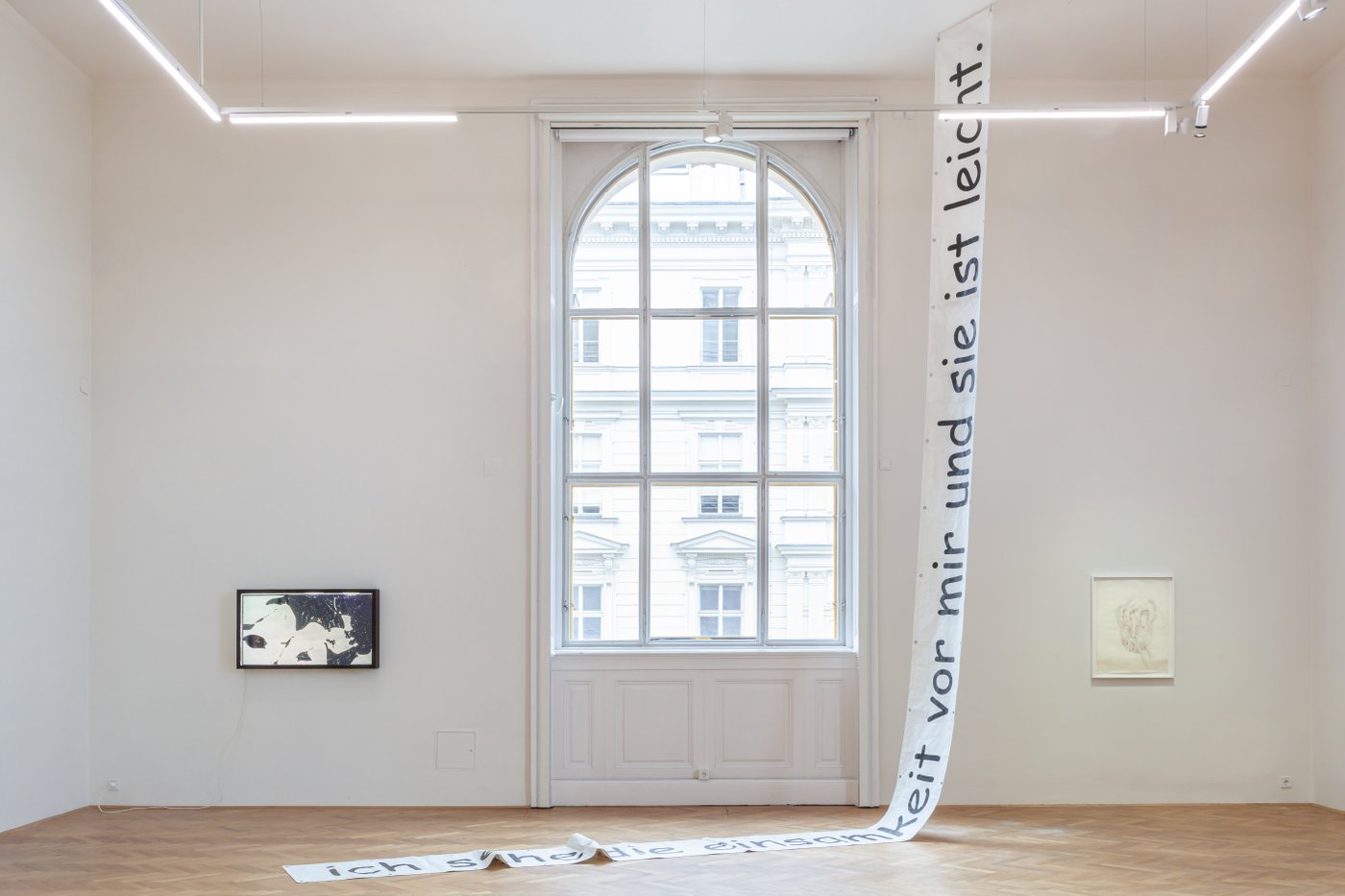
“I see loneliness, and it is light” proclaimed a banner on a building on Mariahilfer Straße in 2020. It is no coincidence that Egermann chose the Comic Sans MS font for this: As the exhibition brochure explains, this typeface is easier to read for people with dyslexia. A key point: Crip Art conceives of accessibility as an inherent part of art, not merely as an adaptation to it. Egermann’s project may seem like a tribute to Illitcheva, but it is only one component of her feminist Crip practice. The exhibition also features the five issues of Crip Magazine, which the artist has published since 2012. The publication addressed key themes in disability studies and provided a forum for critical voices on representation, ableism, and solidarity.
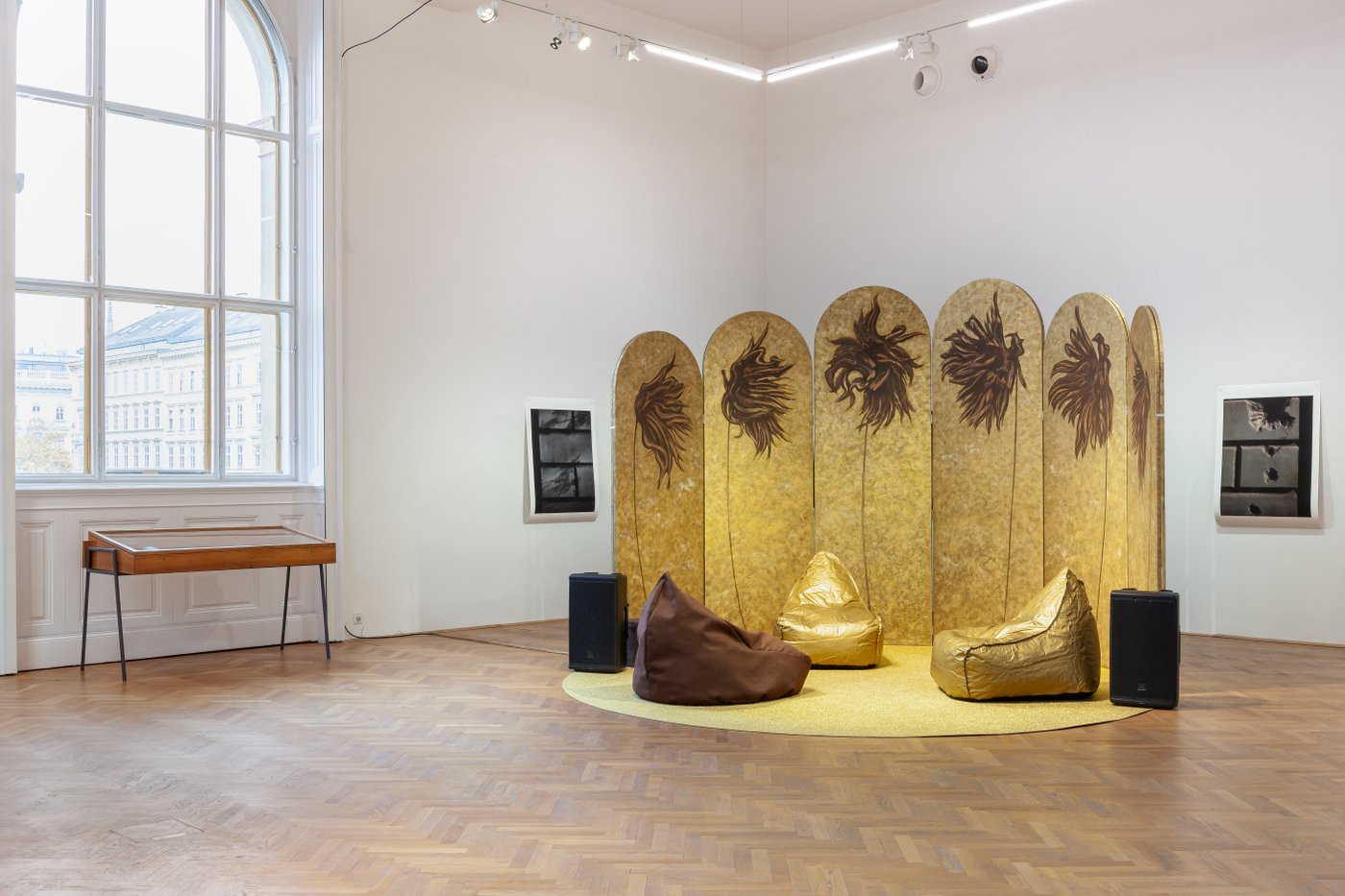
In some of the works in the exhibition, I notice a tendency: they reevaluate what the dominant aesthetic considers broken or in need of repair. For his sculpture Liquid Crystal (a), Bernd Oppl uses a broken LCD screen that now displays an abstract, “painterly” image. He wanted to move beyond the binary opposition of seeing and not seeing, the artist explained at the exhibition opening. I like that the device has no fixed form due to its liquid crystals and that the display is constantly changing. Karin Lock’s project The Waiting Room was created during her chemotherapy. The photographer, who specializes in architecture and interiors, captured damaged, dirty, or scribbled areas on the hospital’s facade. The large-format photographs transform the traces of wear and tear into striking signs of the times. The knowledge of Lock’s cancer lends her beautiful images of the ugly an added depth.
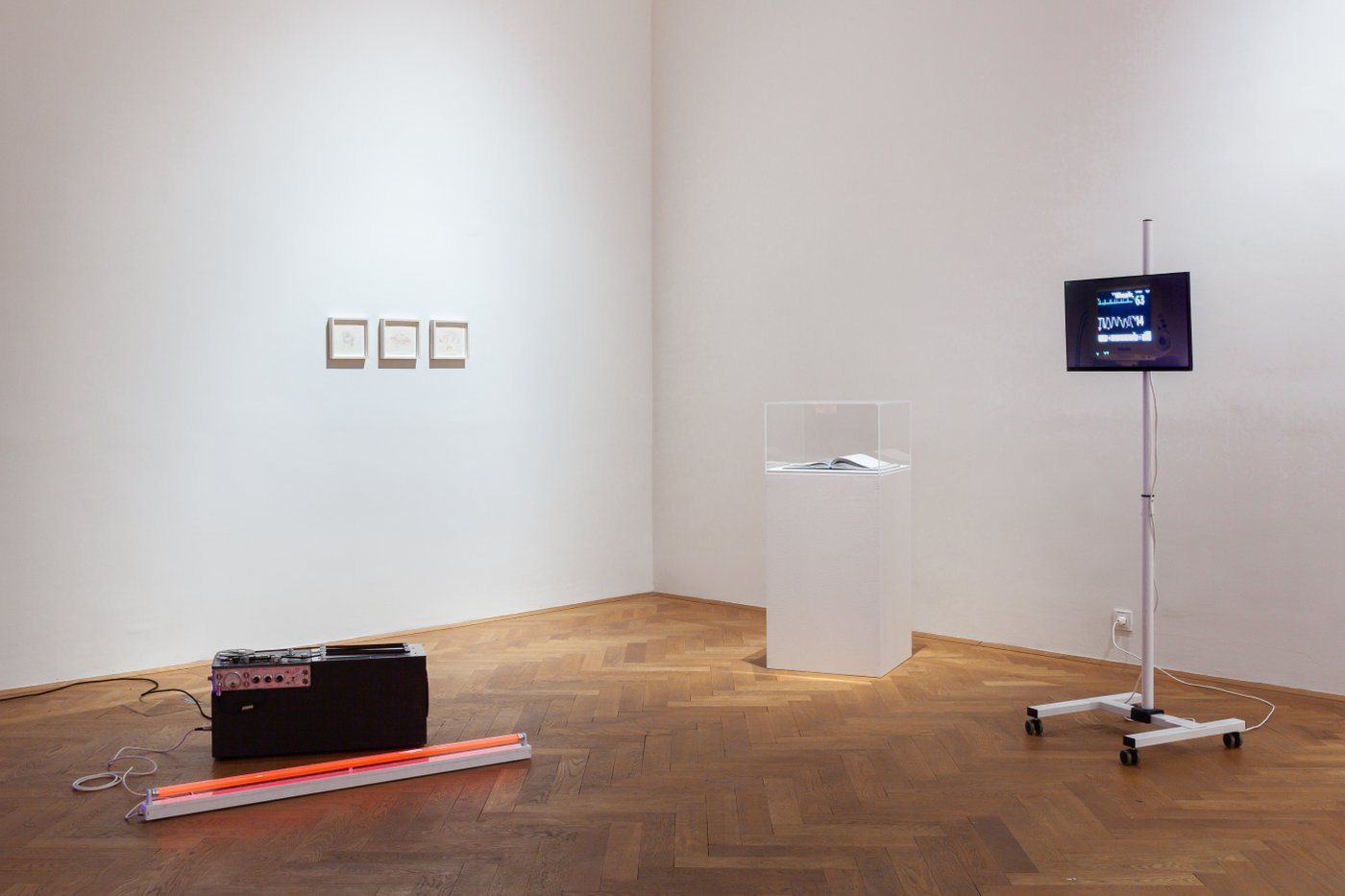
The works of British artist Lizzy Rose resonate with me even more deeply. White, fragrant floral arrangements in the shape of the letters “BRB” hang on the wall, with a tripod and live camera positioned in front of them. When the artist had to be hospitalized for an indefinite period in 2015, she installed the abbreviation for “Be Right Back” in her studio and streamed the flowers’ withering in real time on her website. Her second work, My Heart Will Go On, fills the exhibition with Céline Dion’s pop anthem of the same name. To create it, Rose filmed her pulse and oxygen levels on a vital signs monitor while playing the song on the keyboard. I find her tongue-in-cheek vanitas art heartbreaking.
Blood and Coffee doesn’t strike a minor key, yet I leave the exhibition feeling down. Is it because of the fates of Ianina Illitcheva and Lizzy Rose, who both died in their early thirties? Perhaps I simply lack the emotional distance from art that expresses isolation, disadvantage, and pain. I leave the academy via the main stairwell and search online for the rector’s office contact information. Has anything changed since Muerling’s “Staircase Actions” four years ago? I learn that the artist initiated an ideas competition in 2025. This has resulted in an interesting proposal that may yet be realized: transforming the side entrance on Markartgasse into a gateway for everyone.
Nicole Scheyerer is an art critic and cultural journalist. She has been writing for the weekly newspaper Falter since 2000. Her other journalistic work has appeared in publications such as the Frankfurter Allgemeine Zeitung, the Standard, and the art magazine Monopol. Her areas of focus include video and performance art, body art, and the history of feminist art. In 2021, she received the Austrian State Prize for Art Criticism. In addition to her journalistic work, she teaches at the University of Applied Arts Vienna.