Fashions and Styles on the Move
Part 3: Windhoek, Otjiwarongo, Swakopmund 2025
The Fashion and Styles department at the IKL of the Academy of Fine Arts, the Department of Humanities and Arts/ Fashion Design at the University of Namibia, and the Department of Fashion Design at the Faculty of Arts, Design, and Architecture at the University of Johannesburg launched a collaboration in spring 2023 under the banner “Decolonizing Fashion Research, Textile Healing, and Social Justice” with the support of the Academy's International Office and the EU program ERASMUS+ International Credit Mobility.
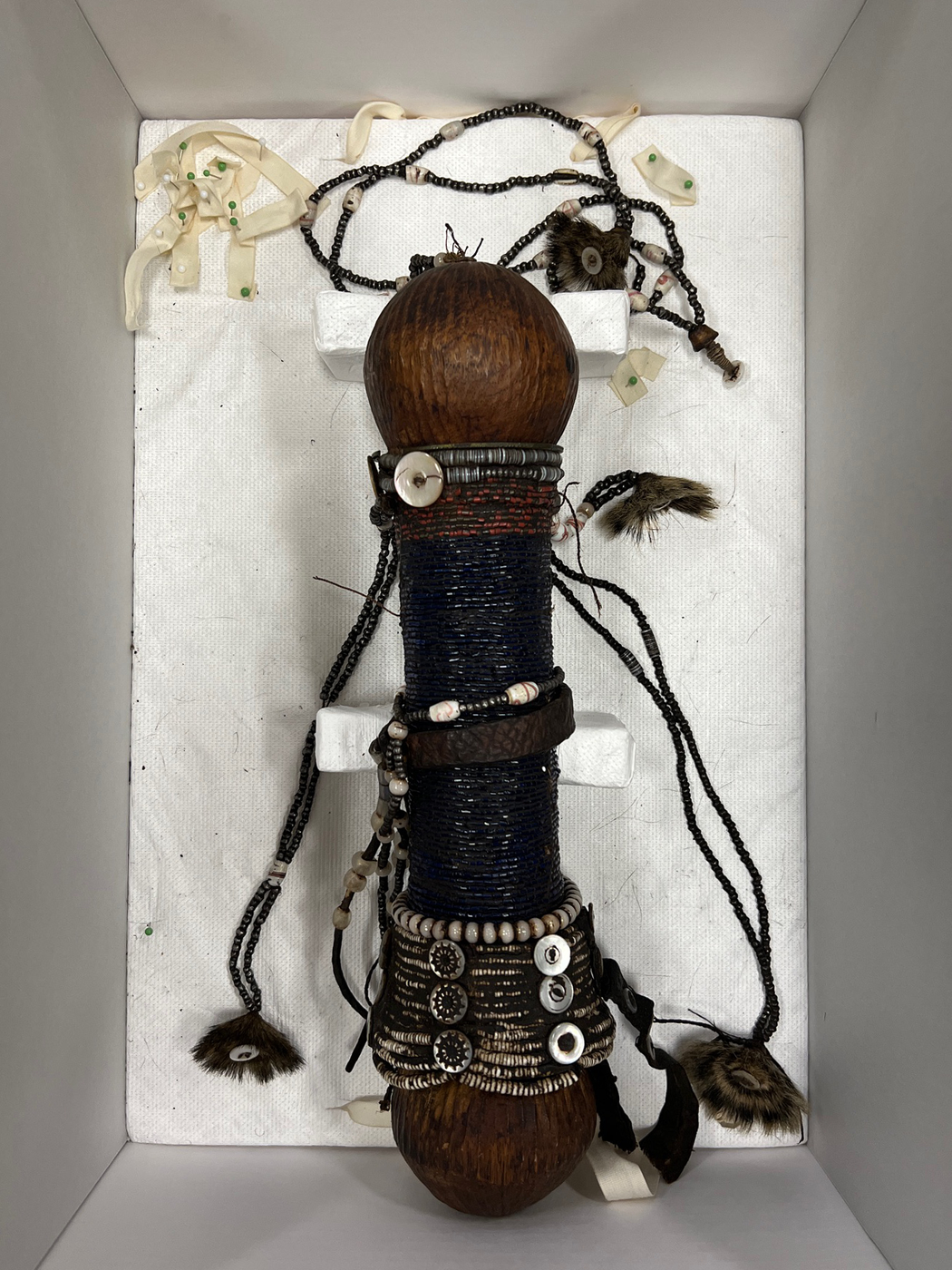
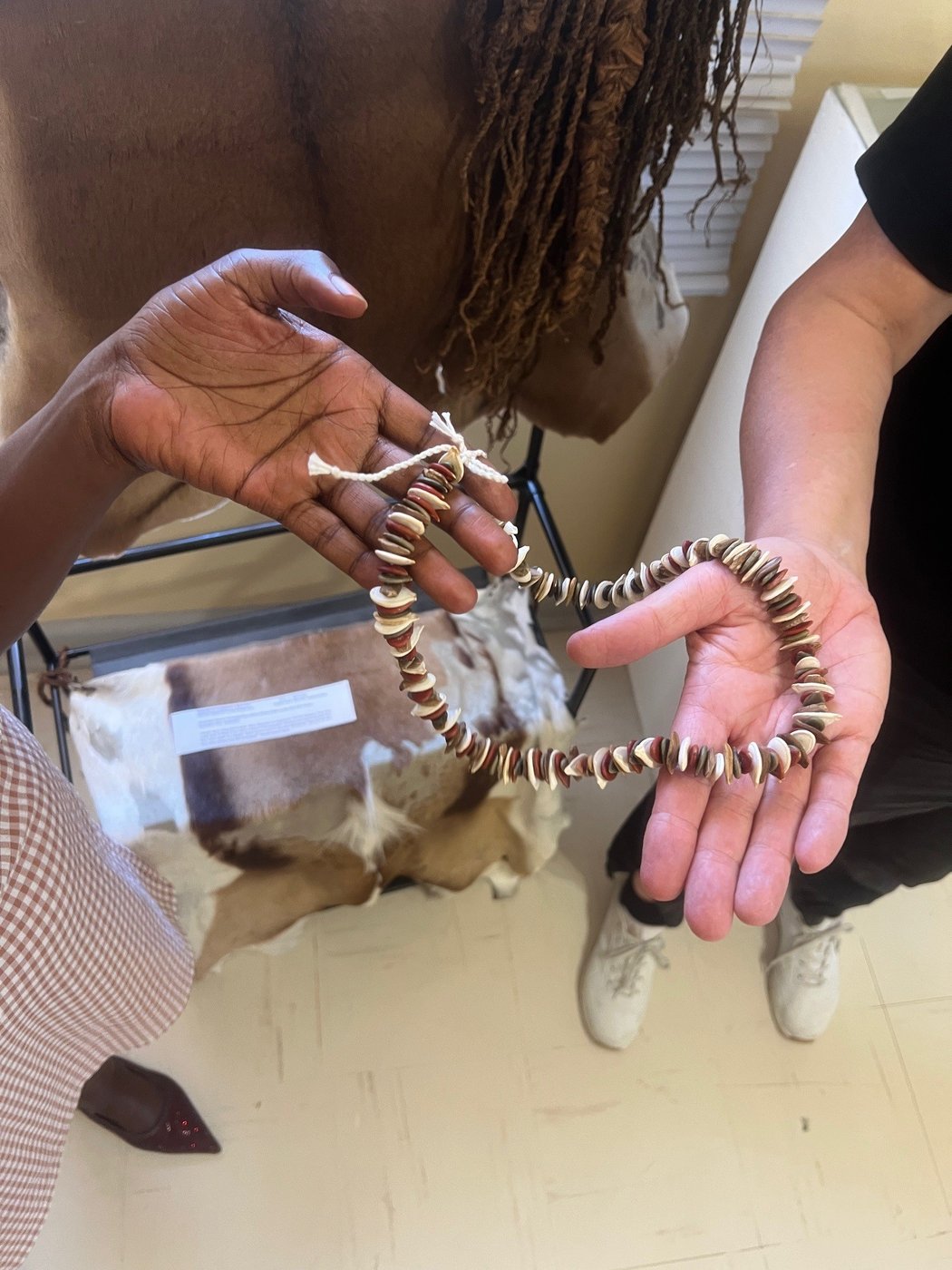
Following a welcome dinner in Windhoek with Loini Iizyenda, a faculty member at the University of Namibia, Akbild faculty members Constanze Pirch and Anna Hambira met with students from the Department of Humanities and Arts/Fashion Design at the University of Namibia for a joint lecture. In their collaboration, they linked interdisciplinary, practice-oriented topics such as art education in a school context with design practice and micro-entrepreneurship in the cultural sector, and reflected together with the students on problems and potential solutions. The Fashions and Styles team was invited to the Museum of Namibia by conservator Johanna Ndahekelekwa Ndjamba and Loini Izyinda to view objects recently restituted from the Berlin Ethnological Collections that had been stolen during the German colonial era. There, they gained insights into the complex historical, cultural, and restoration research required following the repatriation of pre-colonial clothing and jewelry. The team also encountered an object they were familiar with from stories told by their colleagues: Okadina, a noble wooden doll that Queen Olugondo of Ondonga had commissioned around 1900 for Anna, the daughter of the Finnish missionary Martti Rautanen, and had named after her (Okadinia). Dolls like this were called Okaana koshiti: they represented children and usually carried the name that the first child of a married couple was to receive.
At the same time, Elke Gaugele and Sarah Held did research at the National Archives of Namibia on the history of German colonization, forced labor, the concentration camps, and the genocide against the Ovaherero, Nama, and Damara from 1904 to 1908. In addition, they examined textile artifacts archived there: T-shirts from the civilian resistance during Namibia’s fight for independence. At the University of Namibia, they gave a lecture titled “Unraveling Supremacy: Far-Right Fashion and the Design of Protest, Education, and Democracy Across Continents.” Constanze Pirch established contact with Salinde William, who works in teacher education at the University of Namibia and teaches at Martti Ahtisaari Primary School in Katutura. She was invited to visit classes to gain insight into school practices and teacher education in Namibia.
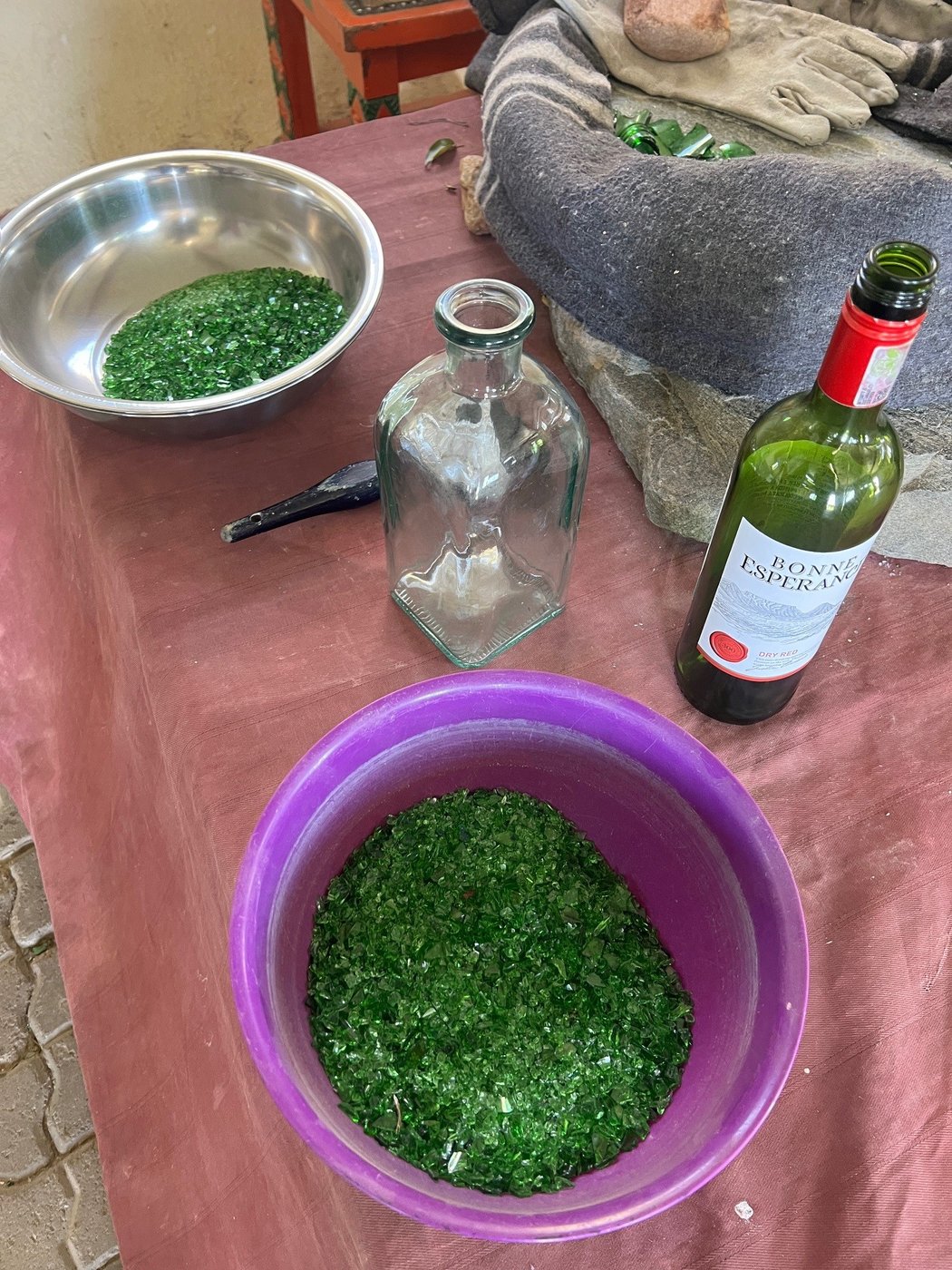
The Fashions and Styles team then visited an impressive community project, the Penduka Embroidery Village in Katutura. The project is dedicated to promoting textile craftsmanship, fostering creative expression, and empowering women economically in Namibia’s marginalized communities. Its focus is on the production of unique, high-quality handmade products. In addition to a strong focus on hand embroidery, glass bead products and pottery are also produced and sold.
Maria Caley and Loini Izyinda welcomed the Fashions and Styles team in Otjiwarongo, 250 km away. The Museum of Namibian Fashion is the first museum in Namibia dedicated to pre-colonial clothing. Our colleagues, who played a leading role in the museum’s development, guided us through the various exhibitions—covering themes such as Beads and Shells, Hair and Headdresses, Metal Accessories, and Textiles—alongside the current museum team, offering us insights into both contemporary and historical indigenous clothing practices. The joint tour is currently being edited into another GLOBAL CLASSROOM video episode and is scheduled to be released in collaboration with the museum.
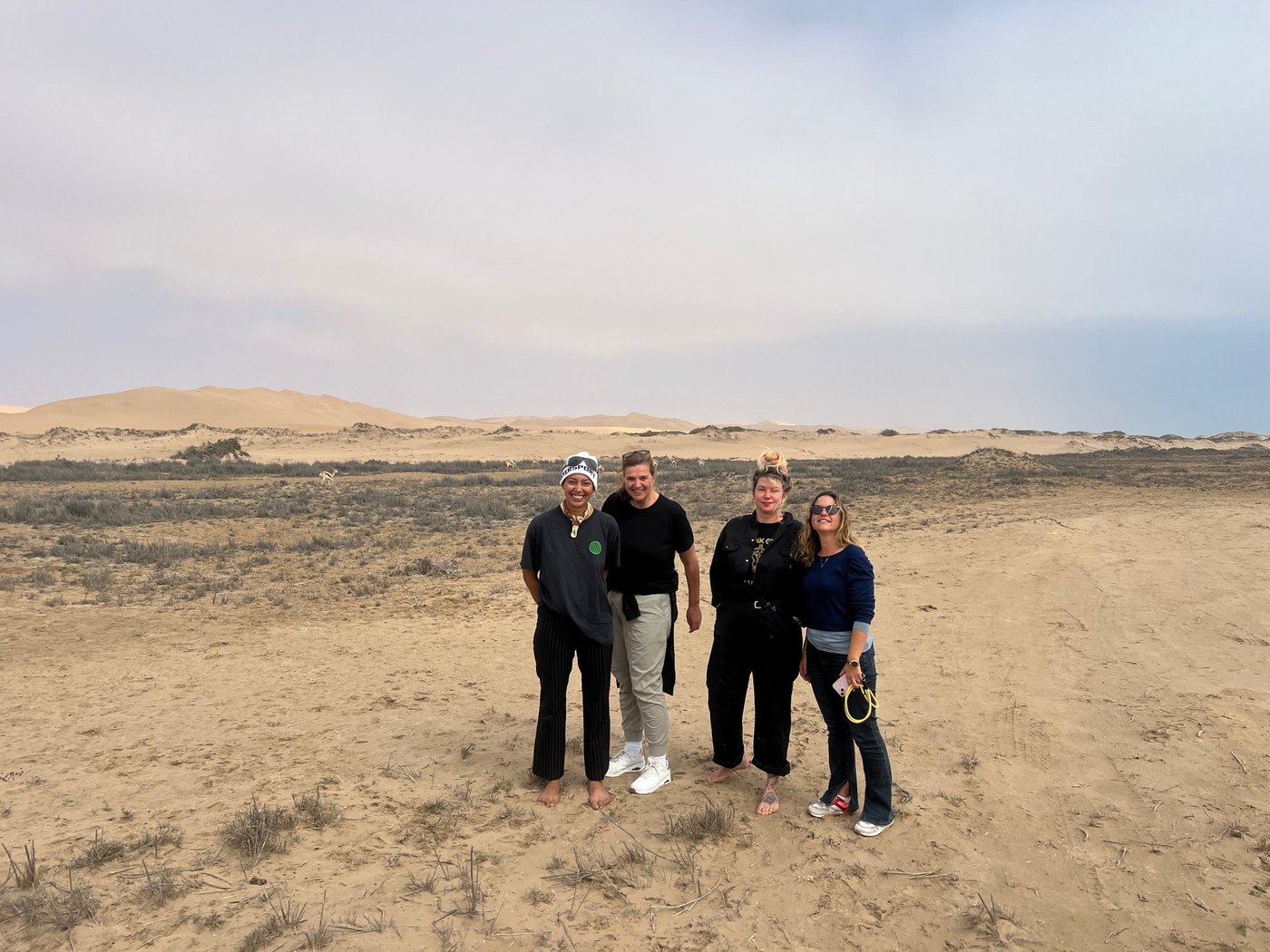
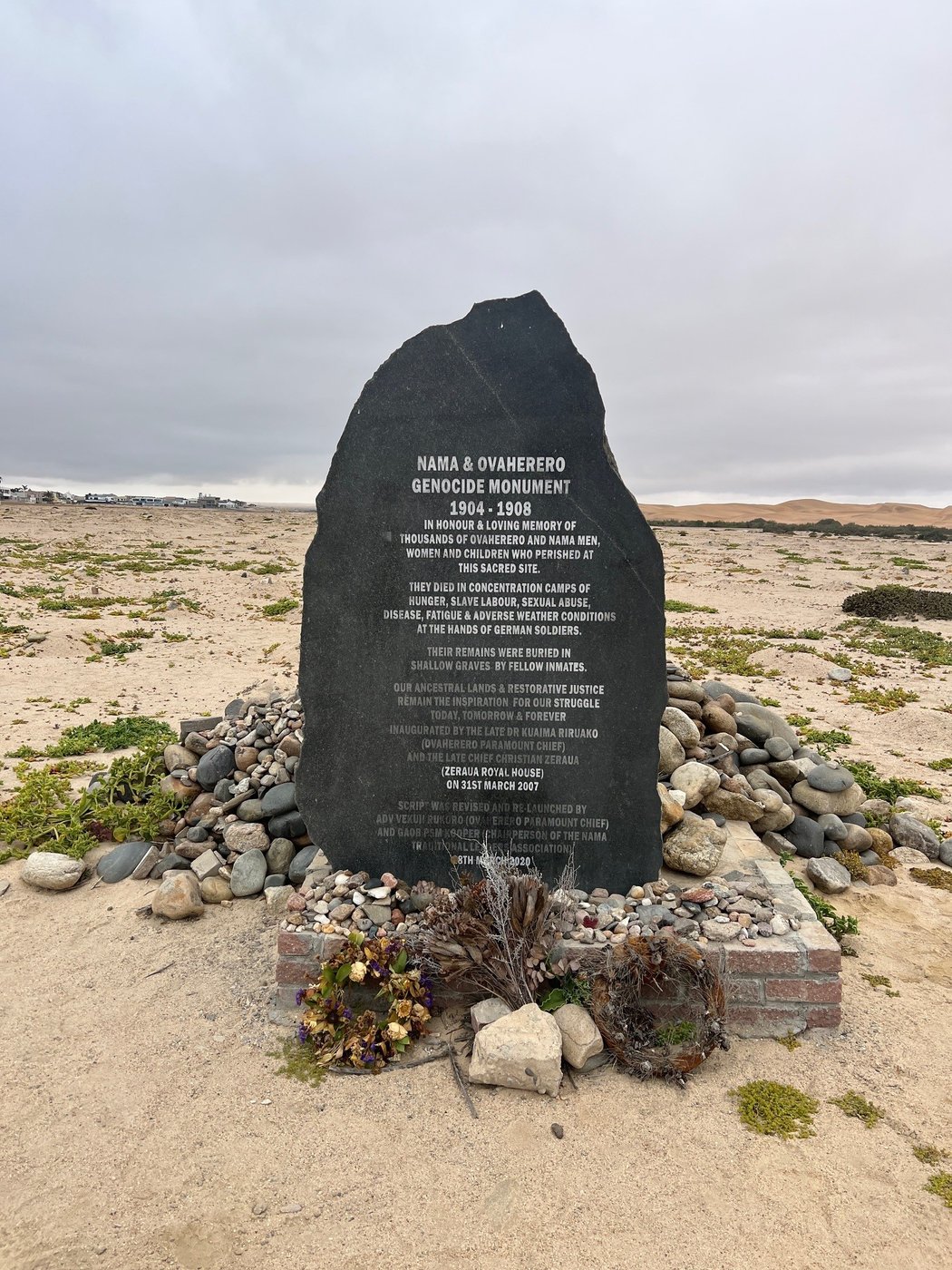
From Otjiwarongo, the Fashions and Styles team traveled through the Namib Desert to the coastal city of Swakopmund. The city’s colonial architecture and its violent history—including its concentration camp and central role in the genocide of the Ovaherero, Damara, and Nama peoples—once again confronted the Fashions and Styles team with the crimes of the German colonial power. In a encounter with local activist and artist Laidlaw Peringanda, who established the Genocide Museum, it became clear how strongly Namibia’s young civil society is fighting in the here and now to address the violent colonial crimes. For many years, Peringanda has been initiating remembrance work and commemorations and driving forward social and historical reckoning. Among other things, he advocates for the localization and exhumation of graves and for the repatriation of human skulls that were once removed from the bodies of the deceased in concentration camps and sold en masse worldwide as commodities to medical and museum collections. He also initiated a memorial on the outskirts of the city, bordering the Namib Desert: a single large stone surrounded by graves honoring the victims of the genocide. Here, grief demands space on the journey. An important next step in Peringanda’s activist work is to promote opportunities and access to therapy and healing for transgenerational trauma and to bring these issues into the public discourse.
Back in everyday life after the end of the trip, and motivated by the in-person encounters and the intensive international exchange, the partnership is currently working on realizing the next milestone of the project. In May 2026, students from the University of Namibia and the University of Johannesburg will travel to Vienna for the first time, accompanied by faculty members, to participate in a project week (Blended Intensive Program, Erasmus+) where they will work on shared topics with students from the Academy of Fine Arts, discover intertwined themes, and establish international connections.