Fashions and Styles on the Move
An ongoing collaboration on decolonization, healing textile practices, and social justice in fashion and design with the University of Namibia and the University of Johannesburg.
Part 4: Vienna 2026
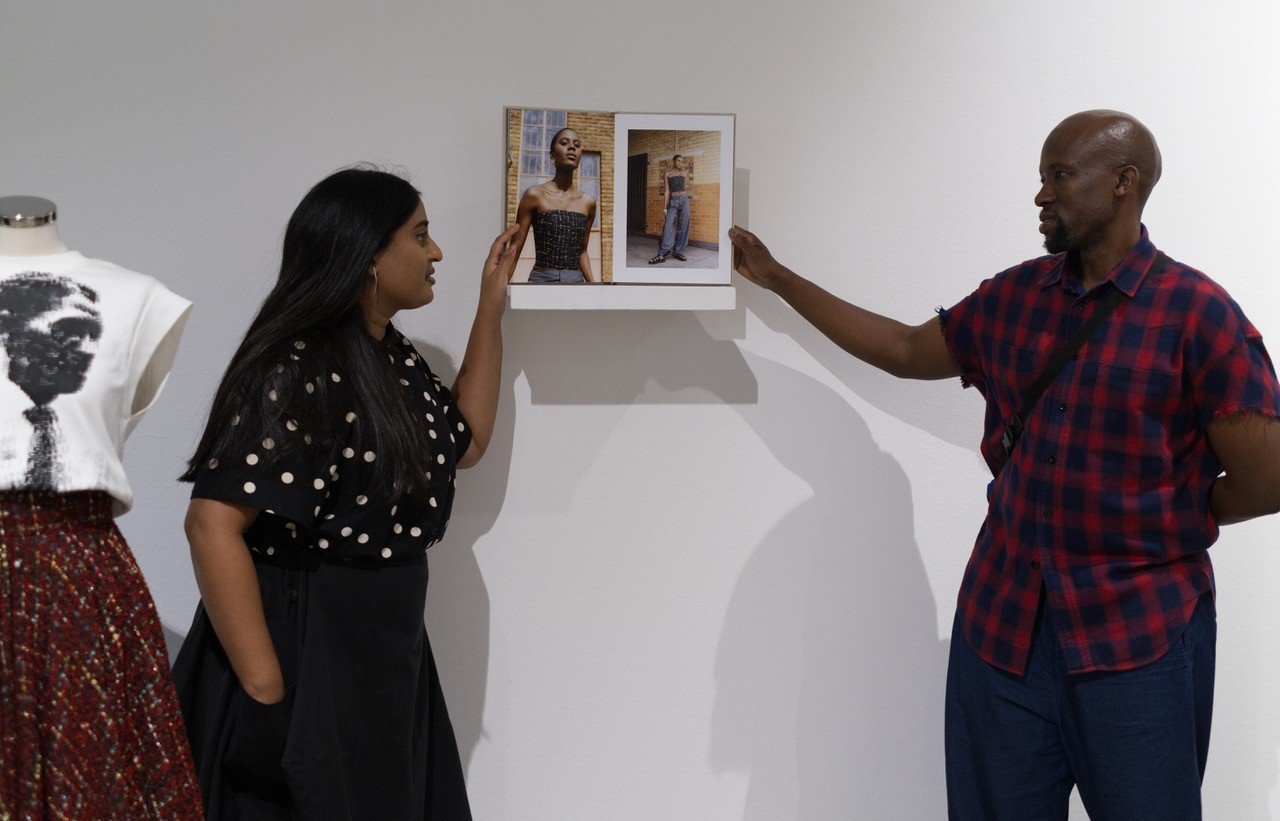
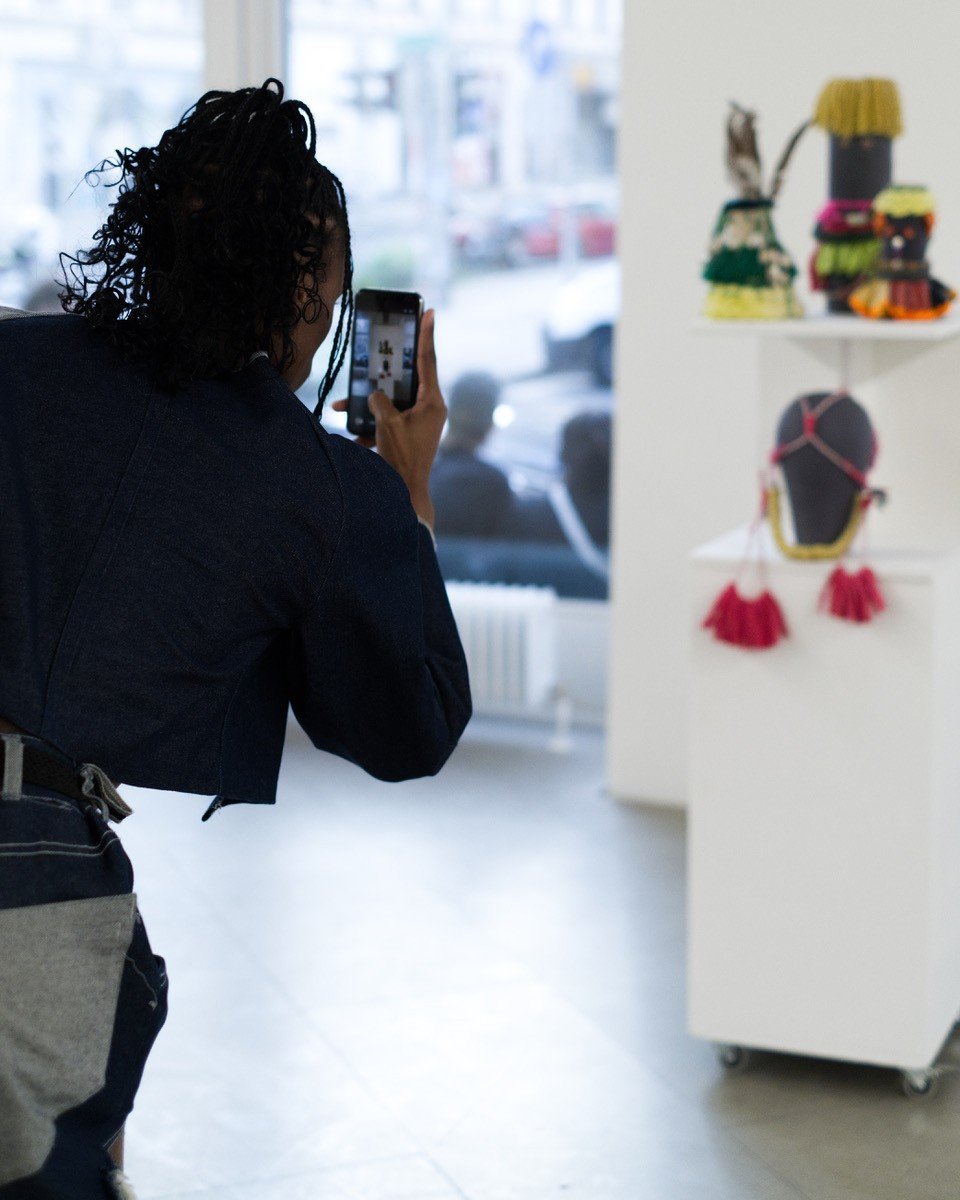
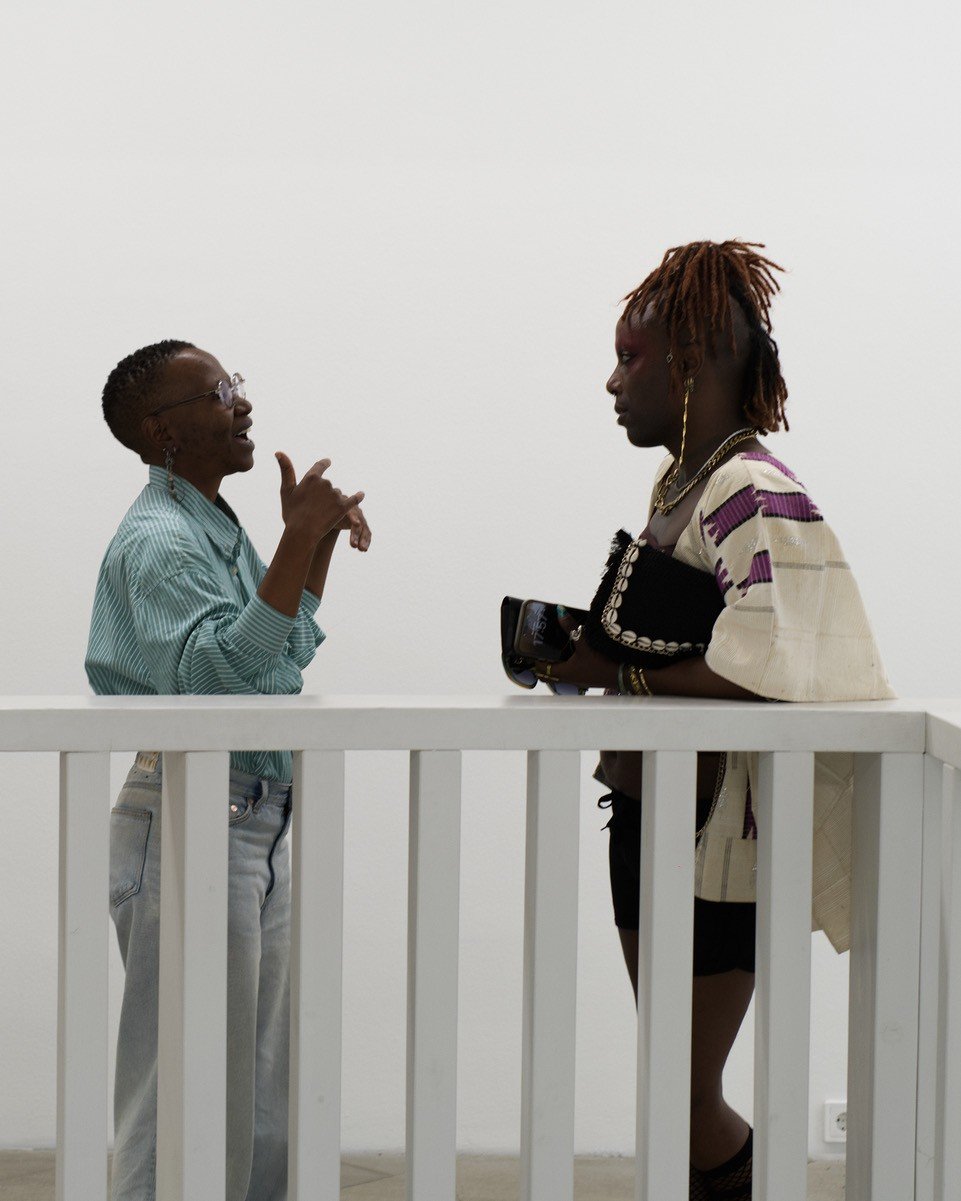
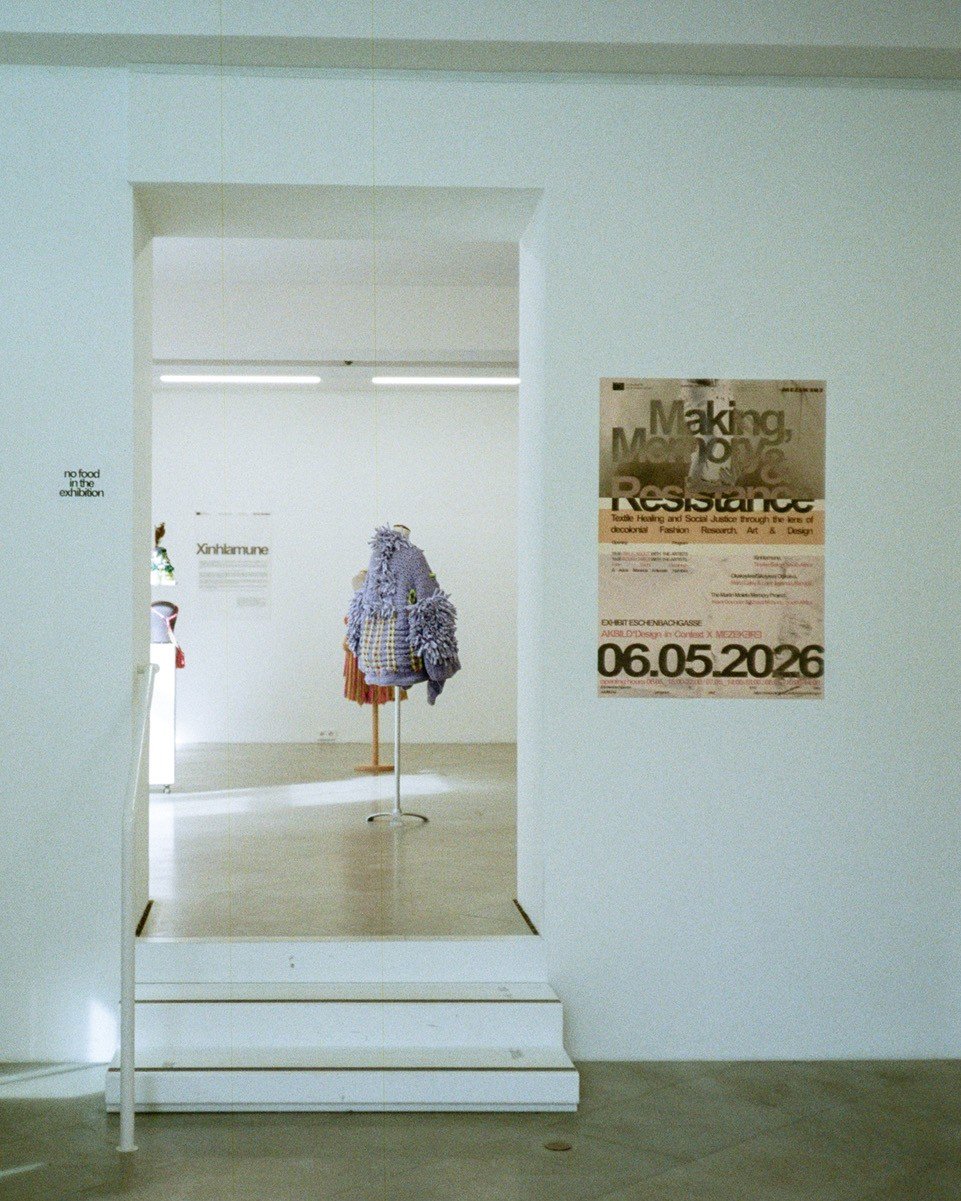
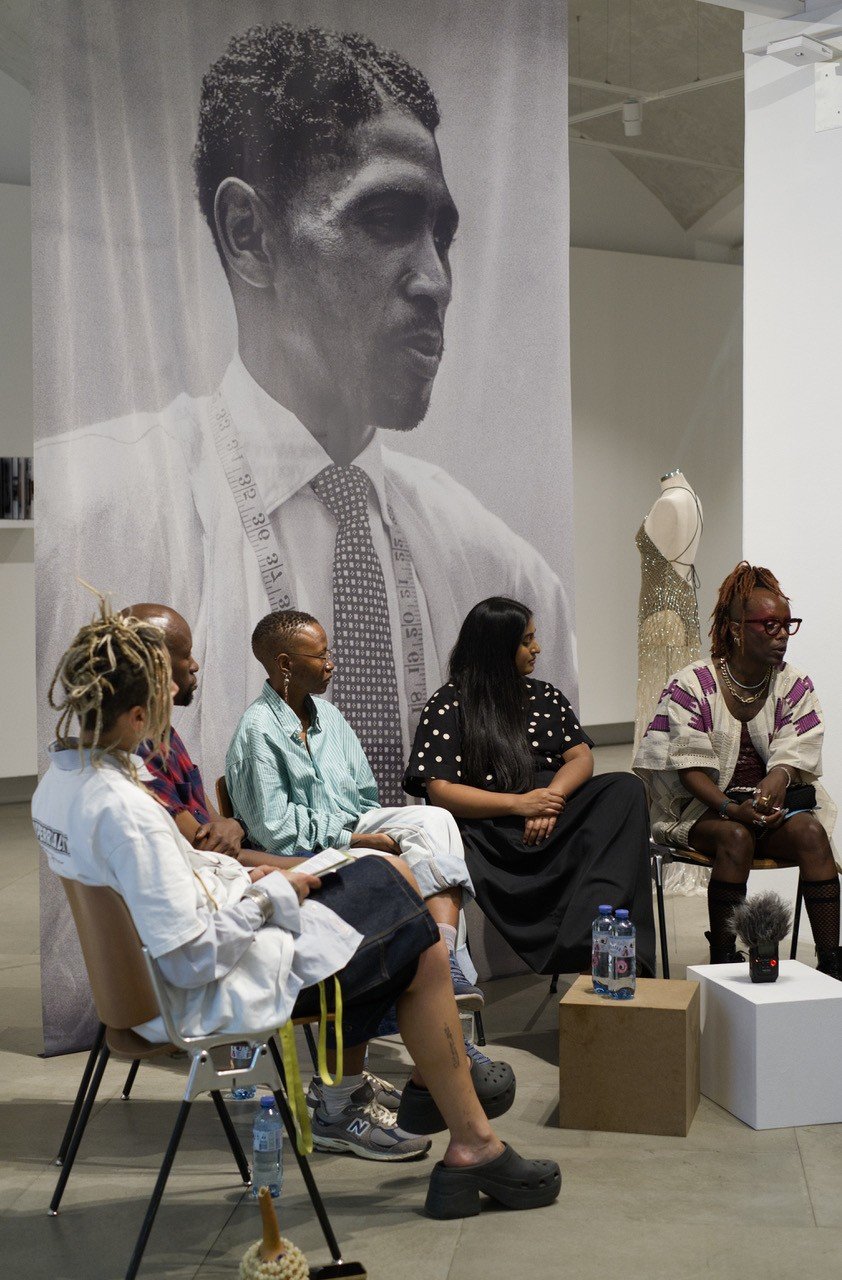
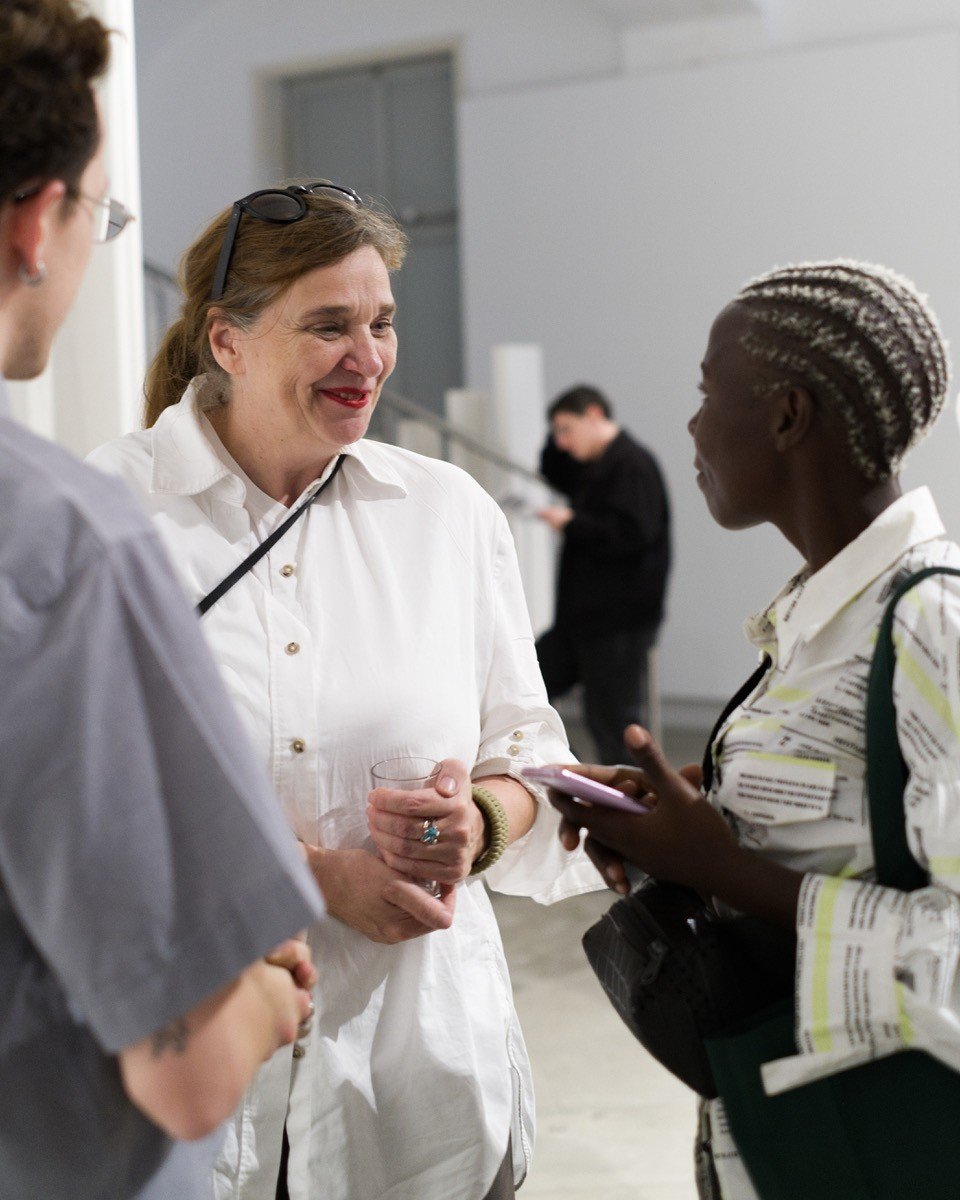
During the summer semester of 2026, the teaching collaboration among the partners continued digitally. Maria Caley (University of Namibia) gave a lecture as part of the course “Connecting Threads—Teaching Formats for Design and Craft Practices” (Academy of Fine Arts, Anna Hambira) on the community project Penduka Embroidery Village, located in Katutura, a district of Windhoek, Namibia. The focus then moved to the first funding phase’s conclusion: the mobility and collaboration of students from the participating universities, which took place in the form of a Blended Intensive Programme (BIP) under Erasmus+ at the Academy of Fine Arts in Vienna in May 2026.
At the digital kick-off event in March 2026, students from the three universities came together for the first time and began their collaboration by responding to the question, “Which object would you pass on to a loved one?” The presentations “Memory and Touch, an Exploration of Textural Communication” by Loini Iizyenda of the University of Namibia and “Ontology of Objects” by Tinyiko Baloyi of the University of Johannesburg provided the students with initial input for their upcoming assignment within the framework of co-design. Working in teams of one student per university, the participants began preparing for the project week in May. Networking and collaboration with local practitioners in Vienna, as well as raising public awareness and visibility of the project, were also part of the preparations for the Erasmus+ Blended Intensive Programme (BIP). With support from the Cultural Forum Austria, based in Pretoria, the Fashions and Styles team was able to arrange the transport of artworks by their colleagues from South Africa to Vienna, in order to design a group exhibition at the Academy featuring these works alongside pieces by their colleagues from Namibia. Furthermore, a cooperation was established with the Vienna-based art space MEZEKƎRƎ, which is dedicated to the artistic practice of the Global Majority and its diaspora. MEZEKƎRƎ sees itself as a translocal space—a place of radical hospitality, encounter, and shared learning that connects local artists with international contexts. The annual program includes exhibitions, performances, concerts, readings, workshops, residencies, and community events.
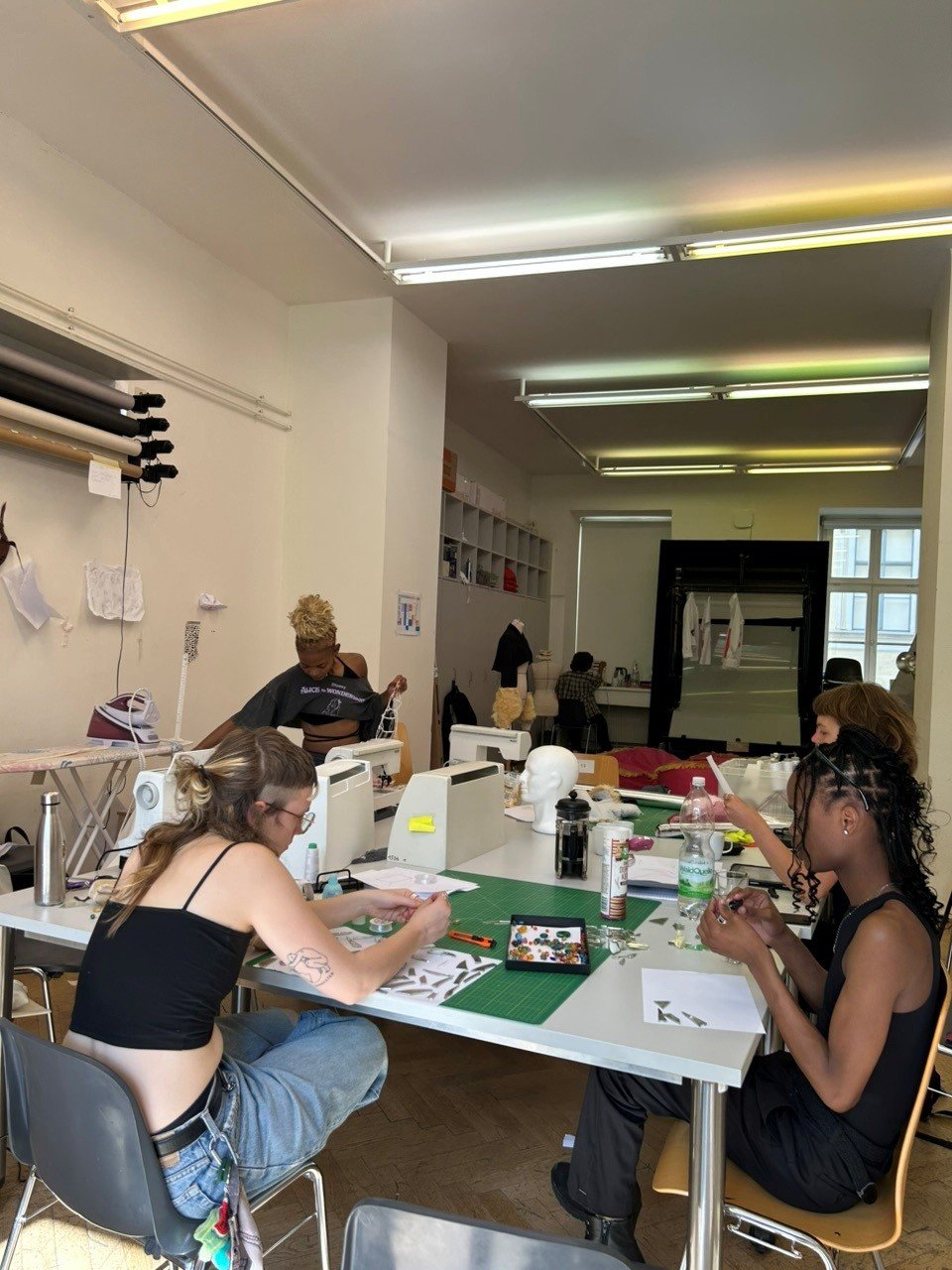
Upon their arrival on May 4, 2026, the team of the Academy of Fine Arts welcomed the international guests to a casual welcome picnic at the Stadtpark. Afterward, students from the University of Johannesburg and AKBILD began collaborating in pairs, for the first time outside the digital realm. Under the banner “OBJECTS, DESIGN, LIFEWORLDS, ENTANGLEMENT,” they developed co-designs over the following days: collaborative objects, garments, and artworks. At IKL, they were supported by workshop supervisors in various studios (sewing workshop, screen printing, and Mac room). At the same time, theoretical input sessions were held by faculty
members from the three universities, featuring joint presentations, workshops, and visits to exhibitions. In the BIP studio, which was provided to the students for the duration of the project week, they were able to work independently, dream, and experiment outside the context of formal instruction.
The team of visiting faculty members was invited to a BIPOC-only dinner featuring an artist talk in honor of the Brazilian artist Gê Viana at the MEZEKƎRƎ art space. Gê Viana, whose large-scale soundsystem installations were most recently shown at the Rio de Janeiro Biennial, was currently participating in a MEZEKƎRƎ artist-in residence program. This gathering of various actors from the Global Majority—and the recognition of the intersections in their individual artistic and research practices, with a focus on archives, memories, visual narratives, and counter-narratives left a feeling of connection and a spirit of new beginnings.
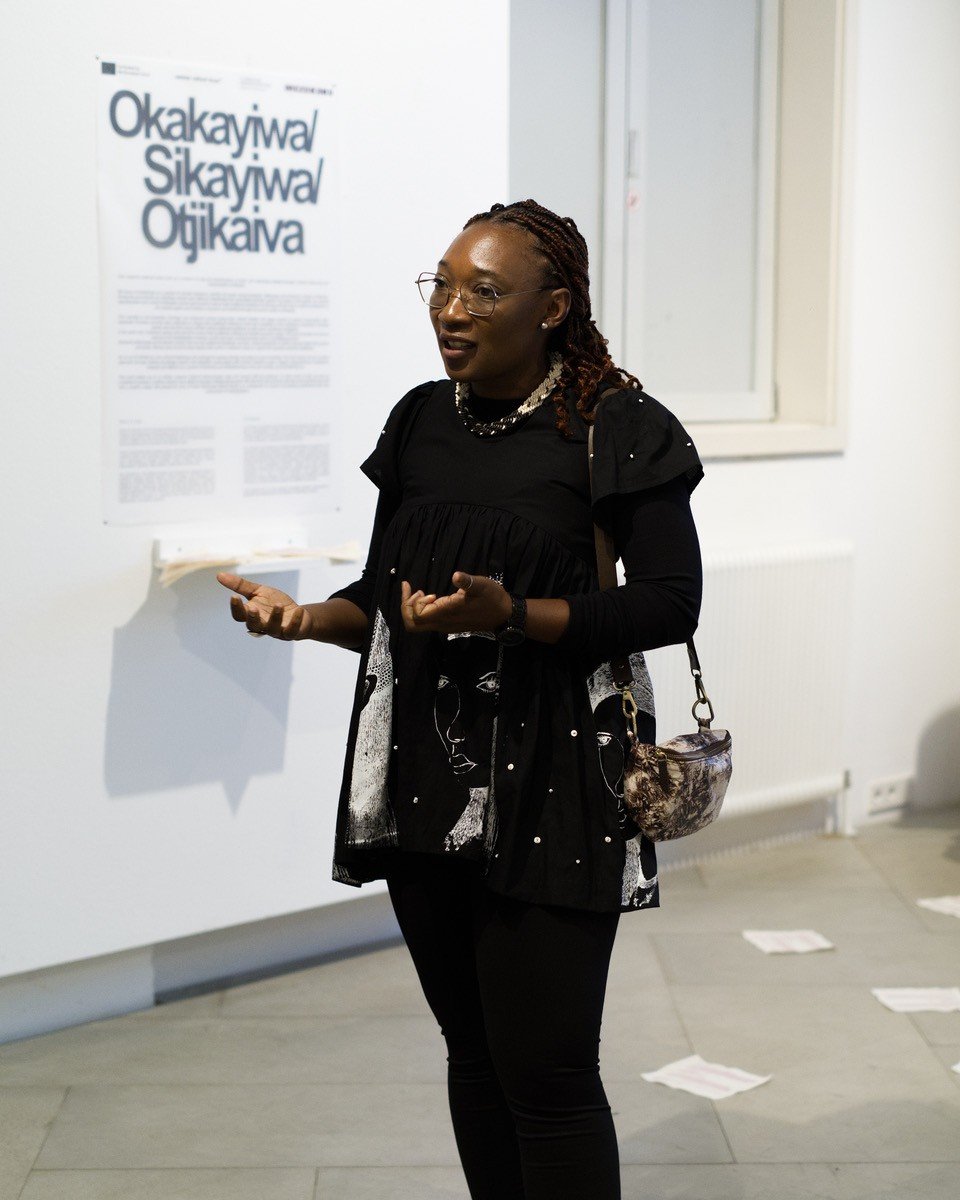
The Blended Intensive Programme (BIP) week featured a series of public events. On Wednesday, the exhibition “Making, Memory, and Resistance—Textile Healing and Social Justice through the Lens of Decolonial Fashion Research” opened at the Exhibit Eschenbachgasse gallery, presenting three independent positions by Khaya Mchunu and Kiara Gounder (South Africa), Maria Caley and Loini Iizyenda (Namibia), and Tinyiko Baloyi (South Africa). The exhibition featured research-based installations that explore textile practices as sites of memory, resistance, and healing. Moderated by Anna Hambira, the artists led the numerous guests through their artworks in Walk Abouts.
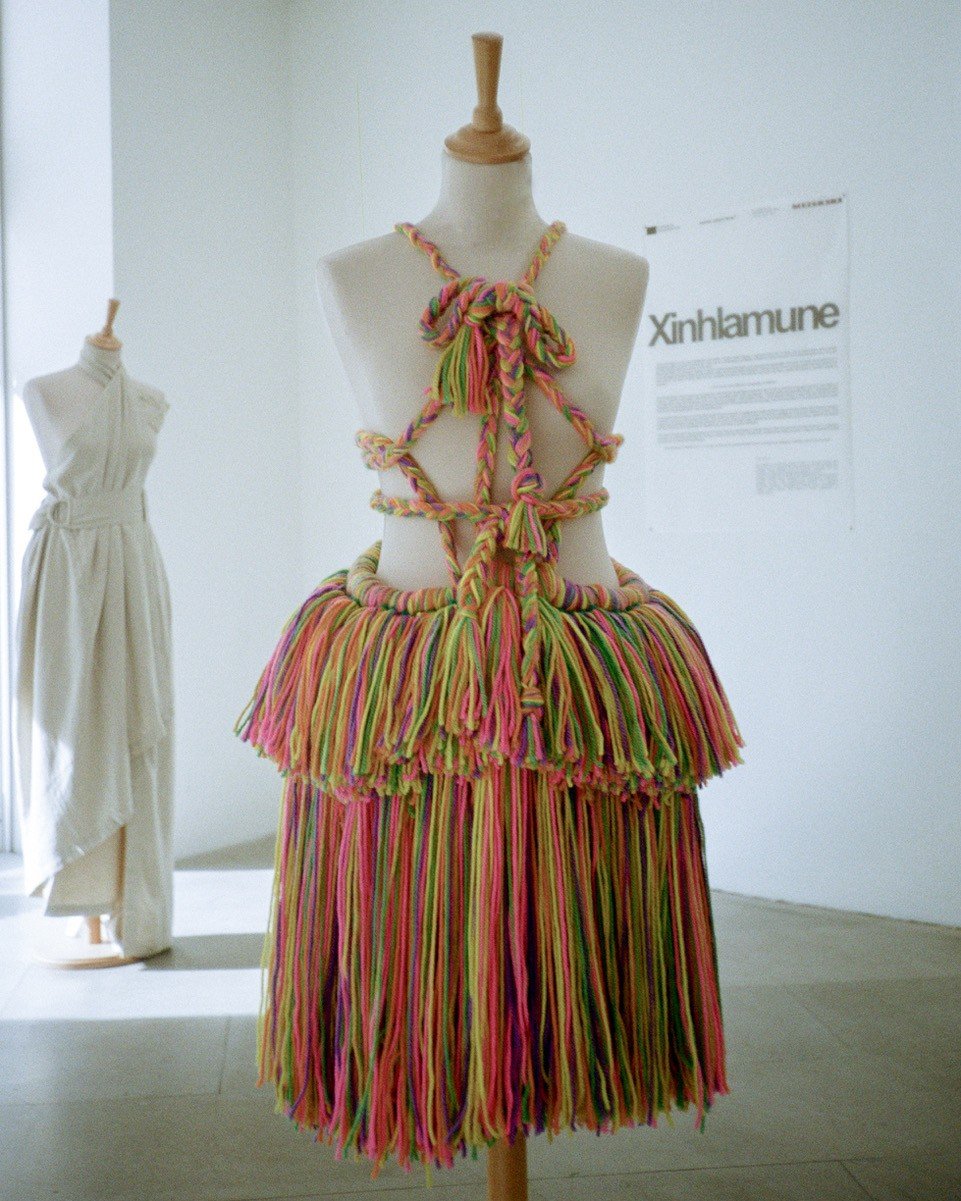
“Xinhlamune” by Tinyiko Baloyi is based on contemporary explorations of N'wana figures as living bearers of indigenous textile design practices in Tsonga culture. “Xinhlamune” is an expression of decolonial forms of knowledge, shaped by integration into family and community, initiation, and identity. The N'wana figures were co designed with members of the artist’s family. Textile techniques such as weaving, knotting, and knitting are combined here with pattern making techniques based on construction and draping.
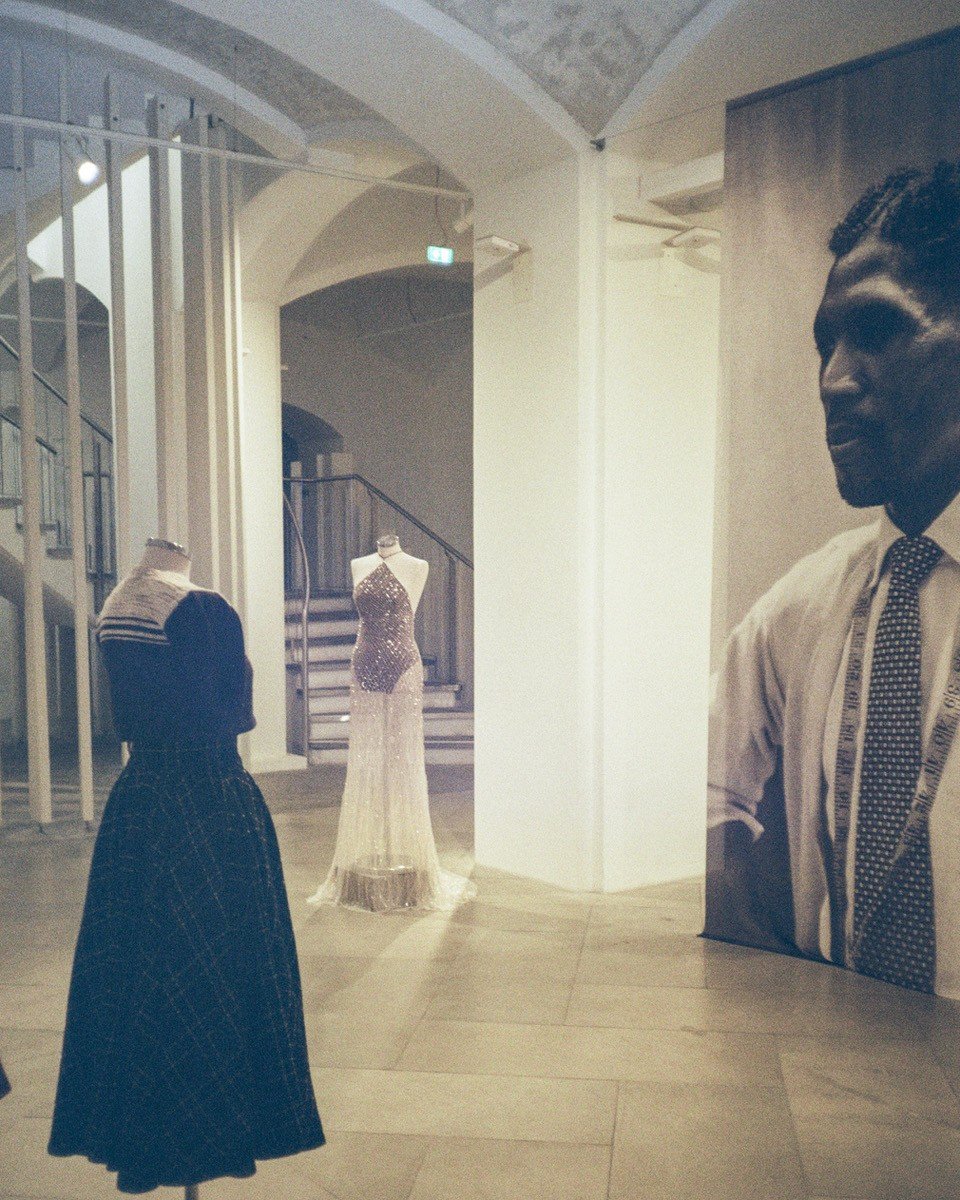
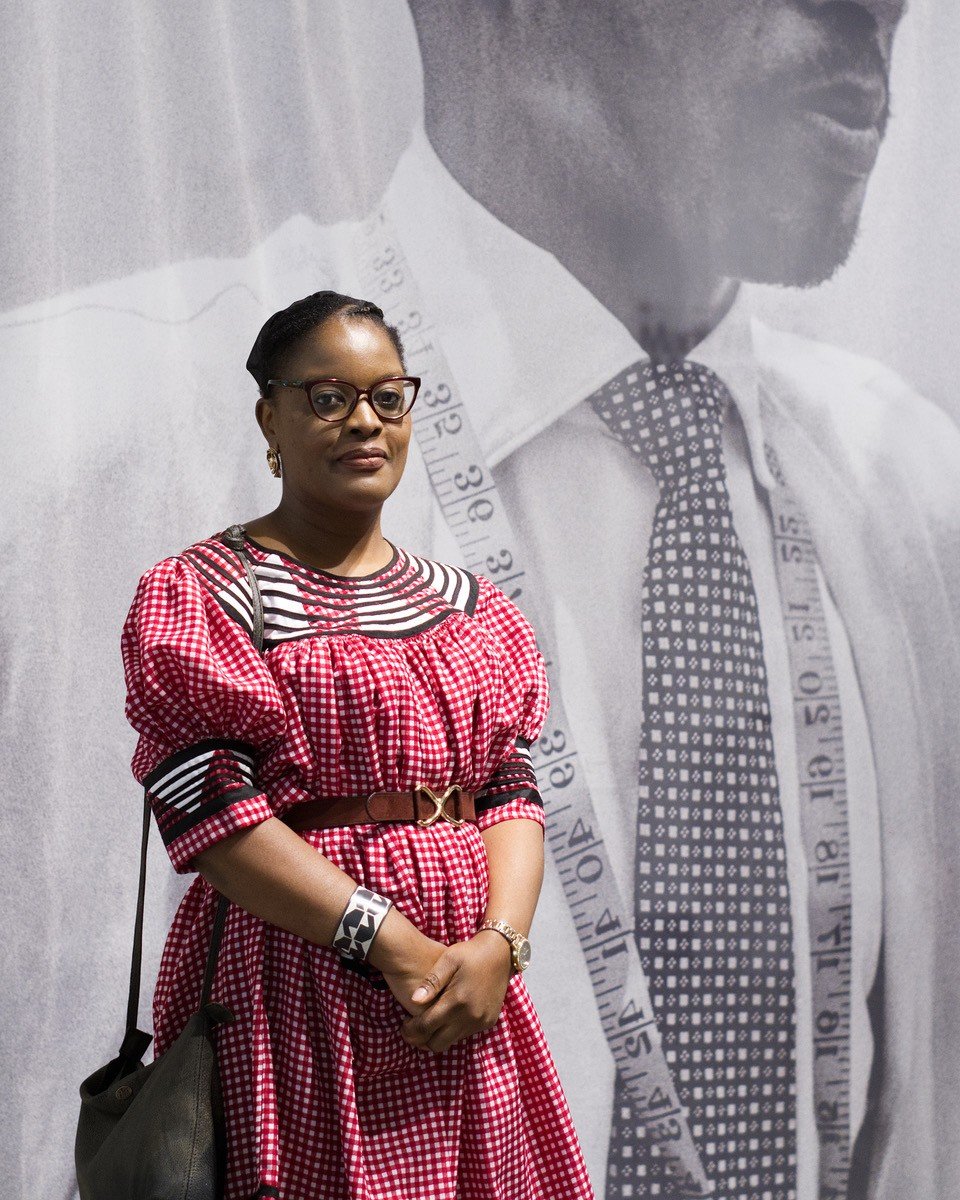
“The Martin Molefe Memory Project” by Khaya Mchunu and Kiara Gounder is dedicated to fashion designer Martin Molefe, who has been erased from collective design history. Molefe, who practiced in Soweto during the 1950s and 1960s during the so-called “racial segregation” of the apartheid system, first came to the attention of the two designers/researchers in an archive: on the pages of the magazine “Drum” under the title “Prince of African Fashion.” As part of the project, speculative garments were created in the designer’s signature style. Mchunu and Gounder moved beyond mere reproduction, took design decisions within the context of decolonization, and created contemporary garments through speculative design, deeply rooted in South African Black fashion history.
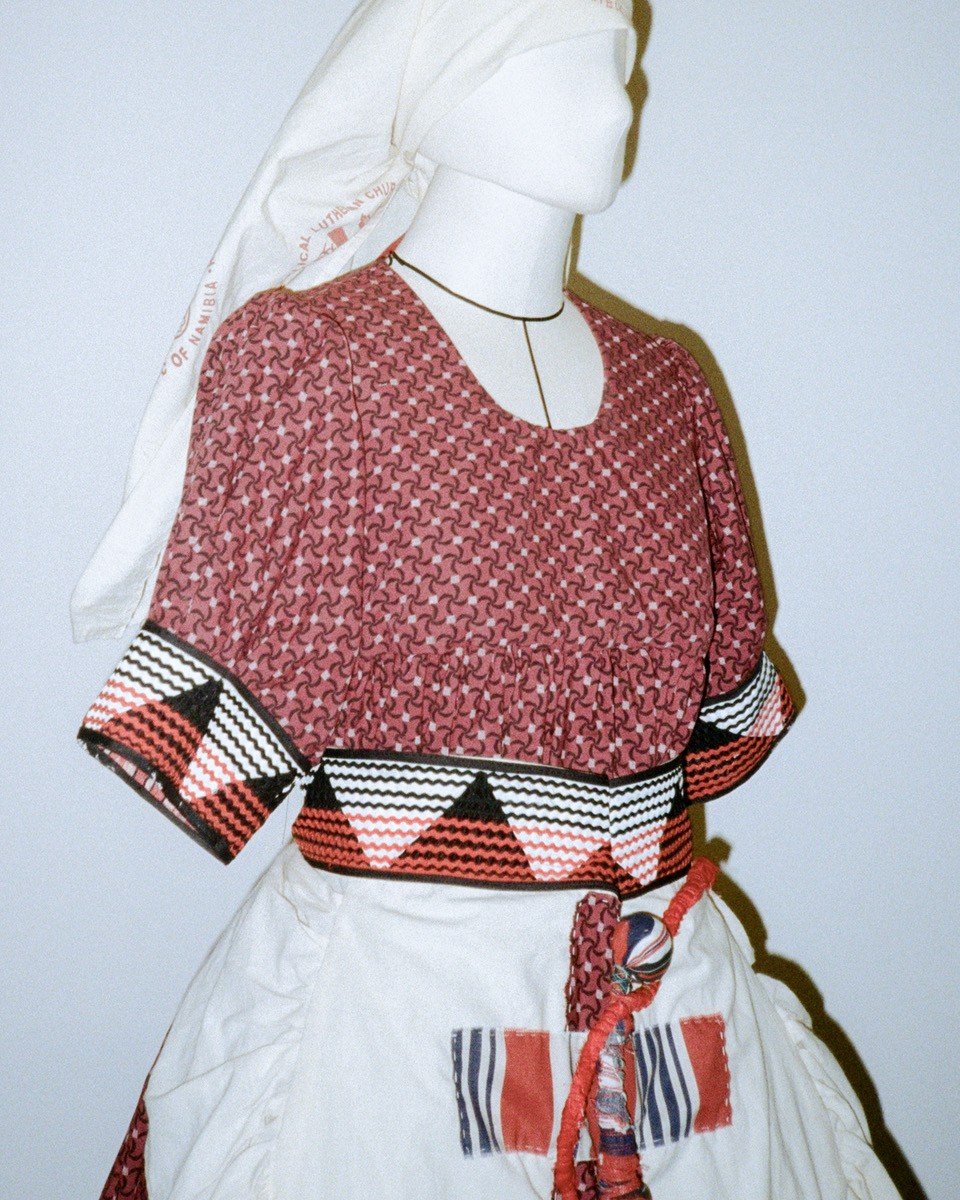
“Okakayiwa/Sikayiwa/Otjikaiva” by Maria Caley & Loini Iizyenda reveals the influence of colonial violence on the development of the various headscarf styles worn by Aawambo, Kavango, and Ovaherero women. The headscarf, used as a tool of oppression in the course of so-called missionary work, forcibly replaced indigenous hairstyles and head coverings and became an invasive intrusion into identity, belonging, and communication of those affected. The appropriation, deconstruction, and further development of the headscarf into diverse styles of dressing is a form of decolonial, identity-forming female resistance in both historical and contemporary daily life for members of the groups mentioned above.
Following the walkabouts, the designers/ researchers/ artists joined Anna Hambira for a Reflection Round meetup with Faris Cuchi Gezahegn. They are an intersectional LQBTQIA* activist, performance artist, PCCC stand-up comedian, poet, and active founding member of the MEZEKƎRƎ art space. Focusing on the theme “Joyful Resistance, Decolonial Archive Practices, Indigenous Knowledge & Textile Healing,” the participants reflected on shared questions during a public discussion. The following day, a publicly accessible workshop led by Tinyiko Baloyi (University of Johannesburg) took place at the MEZEKƎRƎ art space.
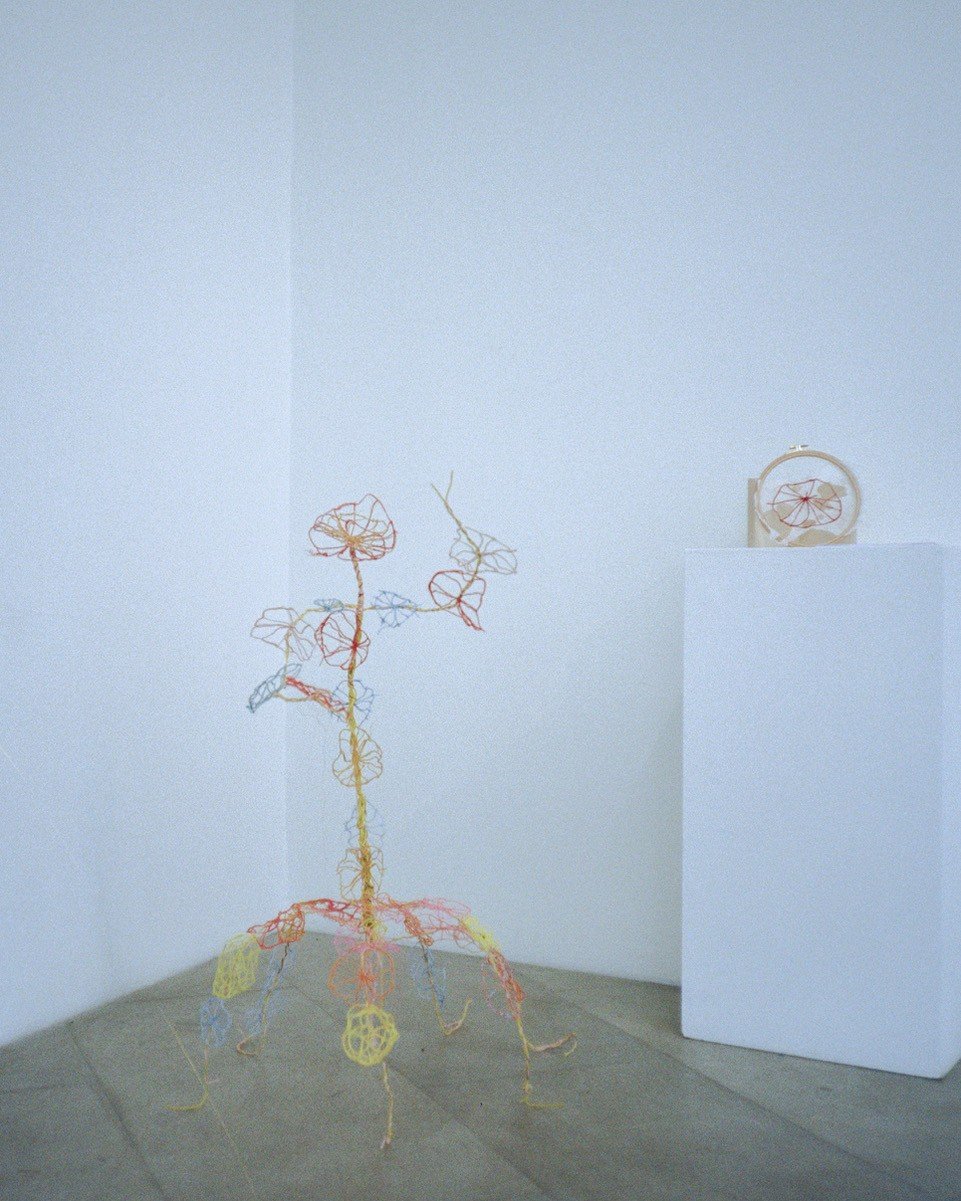
The closing event of the Blended Intensive Programme (BIP) week was the second exhibition on Eschenbachgasse, titled “Draft Exhibition: Objects, Design, Lifeworlds, Entanglement.” Here, the artworks developed during the week through co-design by teams of international students entered into multifaceted dialogues with the works of Tinyiko Baloyi, Maria Caley & Loini Iizyenda, and Kiara Gounder & Khaya Mchunu. “What Does Love Feel Like” by Olivia Gründler & Kathleo Kananelo Kivido, “Seen and Be Seen” by Lwazi Sigwaza & Nasch Neugebauer, “Who Are the Oiden? How Is the Oues?” by Sidonie Sagmeister & Nasief Davis, “Ya Lesedi, Strong Yet Tender” by Promise Mtshana and Sophie Dögl, and “Echo Bloom” by Kelebogile Thoka & Zoé Schwarz. The spectrum of works ranged from fashion installations to textile sculptures and performative interactions, as well as sound and text. The exhibition evolved into a blend of interwoven stories, shared observations, common perspectives, and experiences. At the same time, it embodied an open process at the intersection of encounter, negotiation, and transformation.
Now that funding from the EU’s ERASMUS+ International Credit Mobility programme has concluded, the goal is to travel back to Johannesburg, bringing the artworks and invite local artists and cultural practitioners, as well as other students from Johannesburg, to further develop the exhibition with their own creations, fostering decolonial perspectives on fashion, design, art, and material culture, and to open up further spaces for agency and critical reflection.