Queer Design Practices: Working with Young LGBTQ+
What forms of life does this place support? Ulrike Steven shares queer design practices and insights into creative collaborations with young LGBTQIA+ people. Part of the Gender Studies lecture series by Elke Gaugele and Elke Krasny.
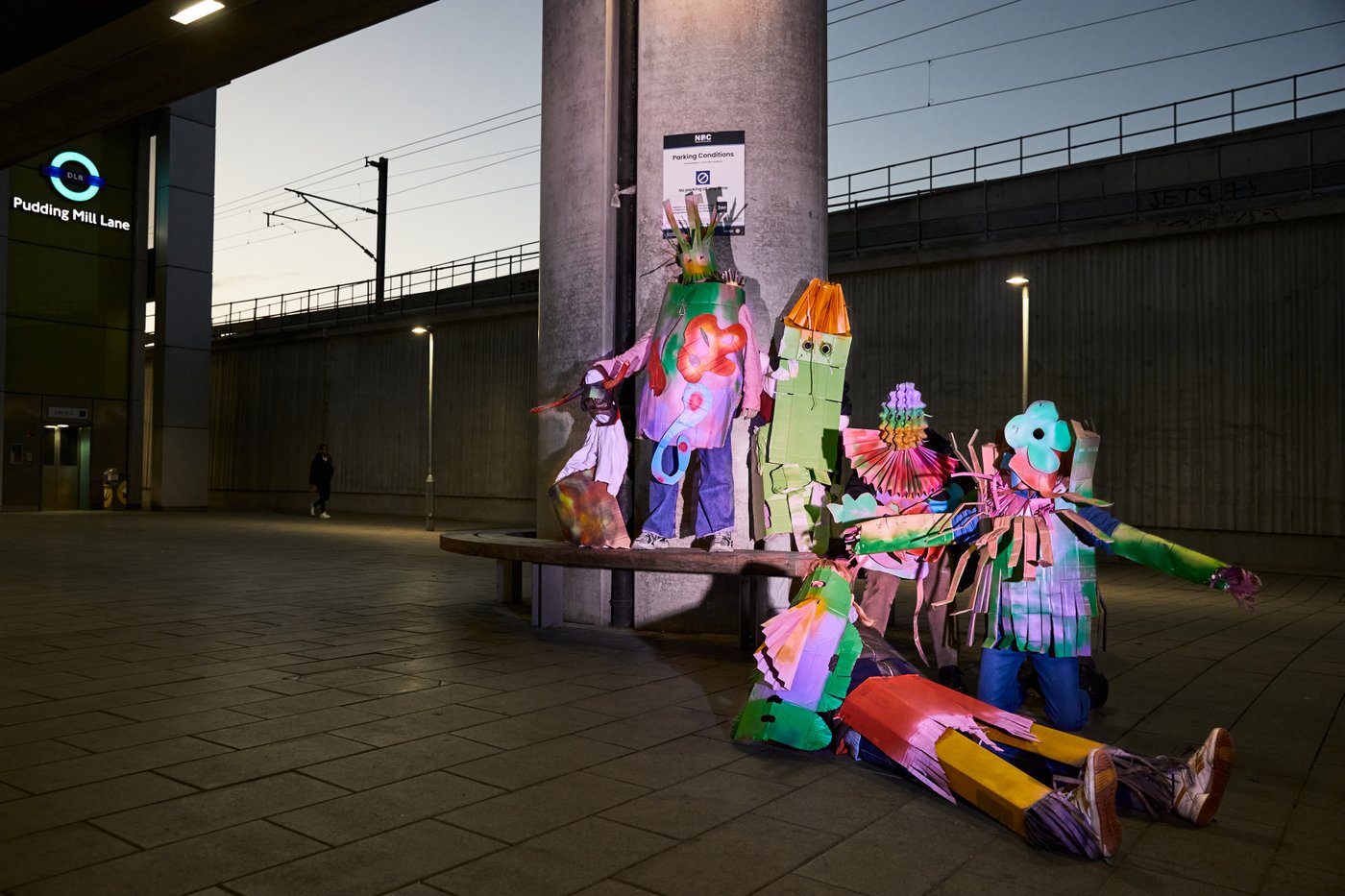
The lecture Queer Spatial Design Practices by Ulrike Steven explores methods of taking up space with ideas and collective action. Approached through a queer ecology lens, the work challenges binary thinking and draws connections between ecological and cultural diversity and the forces shaping urban design.
At its centre is Perfect Flower, a performative action series advocating for the wild, untamed, and chaotic as vital forces for survival. The project operates as a form of spatial resistance to heteronormativity, opening room for fluidity and ambiguity. Against the backdrop of tightly managed urban environments, it was developed in collaboration with young LGBTQ+ people.
Guided by the question, “What kind of life does this space support?”, participants examined their local context through site walks and collective reflection. They then created wearable “body strap-ons” from salvaged cardboard—playful, protective, and provocatively ambiguous structures that transformed them into beautifully unruly creatures resisting normative definition. The workshops fostered safe spaces for experimentation, mutual learning, and meaningful engagement with those often excluded from city-making.
Queer ecology, grounded in queer theory, questions dominant norms of sexuality, gender, and biology. It emphasises interdependence between humans, plants, and animals, countering anthropocentrism by positioning human life alongside, rather than above, more-than-human worlds. The title Perfect Flower refers to the botanical classification of flowers containing both female and male reproductive organs—so-called “perfect flowers,” which make up 90% of flowering plants. While botany accepts such hybridity as ordinary, human culture panics at non-binary embodiment.
The final performative action was staged in public space at Pudding Mill Lane in Stratford, East London. Developed in collaboration with choreographer Heidi Rustgaard and photographer Henri T, the project resulted in photographic works that narrate our expanded understandings of nature, biology, and diversity through collective presence.