Speaking in the First Person: Art, History, and Afterlives
This event takes the landmark publication The Yugoslav Art Space: Ješa Denegri in the First Person, edited by Branislav Dimitrijević and Jelena Vesić, as a point of departure to reconsider the relevance of Ješa Denegri within historical and contemporary artistic frameworks. A collaborative event by the Kontakt Collection and the Academy of Fine Arts Vienna.
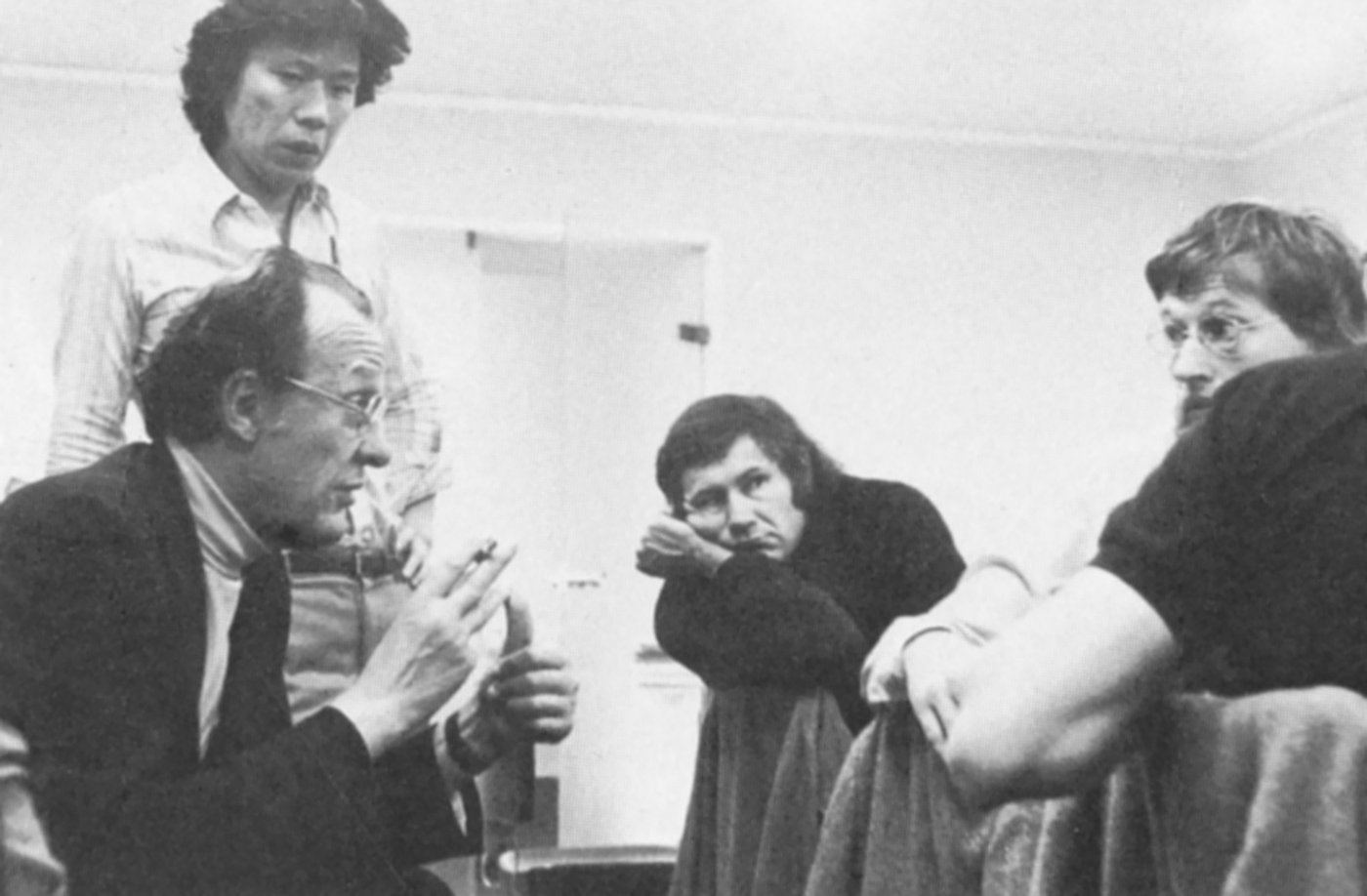
With a Video statement of Ješa Denegri
Branislav Dimitrijević in conversation with Branislav Jakovljević
Jelena Vesić in conversation with Ivana Bago and Milica Tomić
Noit Banai in conversation with Asija Ismailovski, Eva Kovač, and Miljana Mirović
Denegri’s conceptualization of the New Art Practice, alongside his formulation of the “artist in the first person,” established a foundational interpretive paradigm for artists working in Yugoslavia in the 1960s and 1970s. The present program, situated within the expanded field of global art discourse and the artistic ecosystem of the Academy of Fine Arts, Vienna, interrogates the epistemological conditions under which Yugoslav modernist and conceptual practices and their historiographies have been neglected, institutionalized, and reactivated.
One line of inquiry addresses the transgenerational reception of Denegri’s critical apparatus: Do his ideas continue to inform current methodological approaches to conceptual and post-conceptual art histories across diverse contexts? What does it mean to inherit a conceptual vocabulary shaped during Yugoslav socialism, and how can it be translated for audiences encountering it through contemporary art circuits marked by digital culture, migration, and late capitalism?
Another key question concerns the position of the (post-)Yugoslav diaspora in Vienna, whose perspectives complicate linear narratives of art history and for whom Denegri’s framework becomes both a resource and a site of tension. Their contributions challenge the geography of “Yugoslav art,” reframing it as a dispersed and evolving field navigating displacement, fragmented memory, and unsettled identities.
By placing Denegri in conversation with a broad field of interlocutors, this event revisits a foundational figure while asking how his legacy can be mobilized today – as a living methodology rather than a closed historical chapter.
Biographies
Ivana Bago is an art historian, writer, and curator. She is a co-founder of the Sanja Iveković Institute in Zagreb, where she leads a research and publishing project on Iveković’s work and personal archive.
Noit Banai is a professor of diaspora aesthetics at the Institute for Art Theory and Cultural Studies of the Academy of Fine Arts Vienna.
Ješa Denegri is the most influential historian and theorist of Yugoslav modernist art of the 1950s and the 1960s, and the leading authority and critical contributor to the engaging “New Art Practice” in Yugoslavia in the 1970s. He was a curator at the Belgrade Museum of Contemporary Art from its opening in 1965 until 1991, when he became a professor of modern art history at the University of Belgrade’s Faculty of Philosophy until his retirement in 2007.
Branislav Dimitrijević is a professor of history and theory of art at the Department of Art and Design, BAPUSS Academy, Belgrade. As a writer and researcher, he mainly explores visual art, popular culture, and film in socialist Yugoslavia.
Asija Ismailovski is an art historian and curator based in Vienna. She is currently responsible for project organization at KÖR Wien (Public Art Vienna).
Branislav Jakovljević is the Sara Hart Kimball Professor of the Humanities at Stanford University, where he teaches in the Department of Theater and Performance Studies. His most recent book is The Performance Apparatus: On Ideological Production of Behaviors (2025, University of Michigan Press). He is the author of the award-winning book Alienation Effects: Performance and Self-Management in Yugoslavia 1945–1991 (2016) and of a number of other books and articles published internationally.
Eva Kovač is an art historian, curator, and member of BLOCKFREI Collective, based in Vienna. Since 2024, she has been part of the leading team of DAS WEISSE HAUS, a self-organized art institution and association.
Miljana Mirović is an art historian, curator, and gender researcher based in Vienna.
Milica Tomić is an artist based in Vienna, Berlin and Belgrade. Since 2014, she has headed the Institute of Contemporary Art (Faculty of Architecture) at the Graz University of Technology.
Jelena Vesić is an independent curator, writer, editor, and lecturer based in Belgrade. She is active in publishing, research, and exhibition practices that intertwine political theory and contemporary art.