Decolonizing Visual Art Schoolbooks
FWF | ESPRIT
led by Gisella Vismara, Institute for Education in the Arts
Duration: 1.9.2026 – 31.8.2029
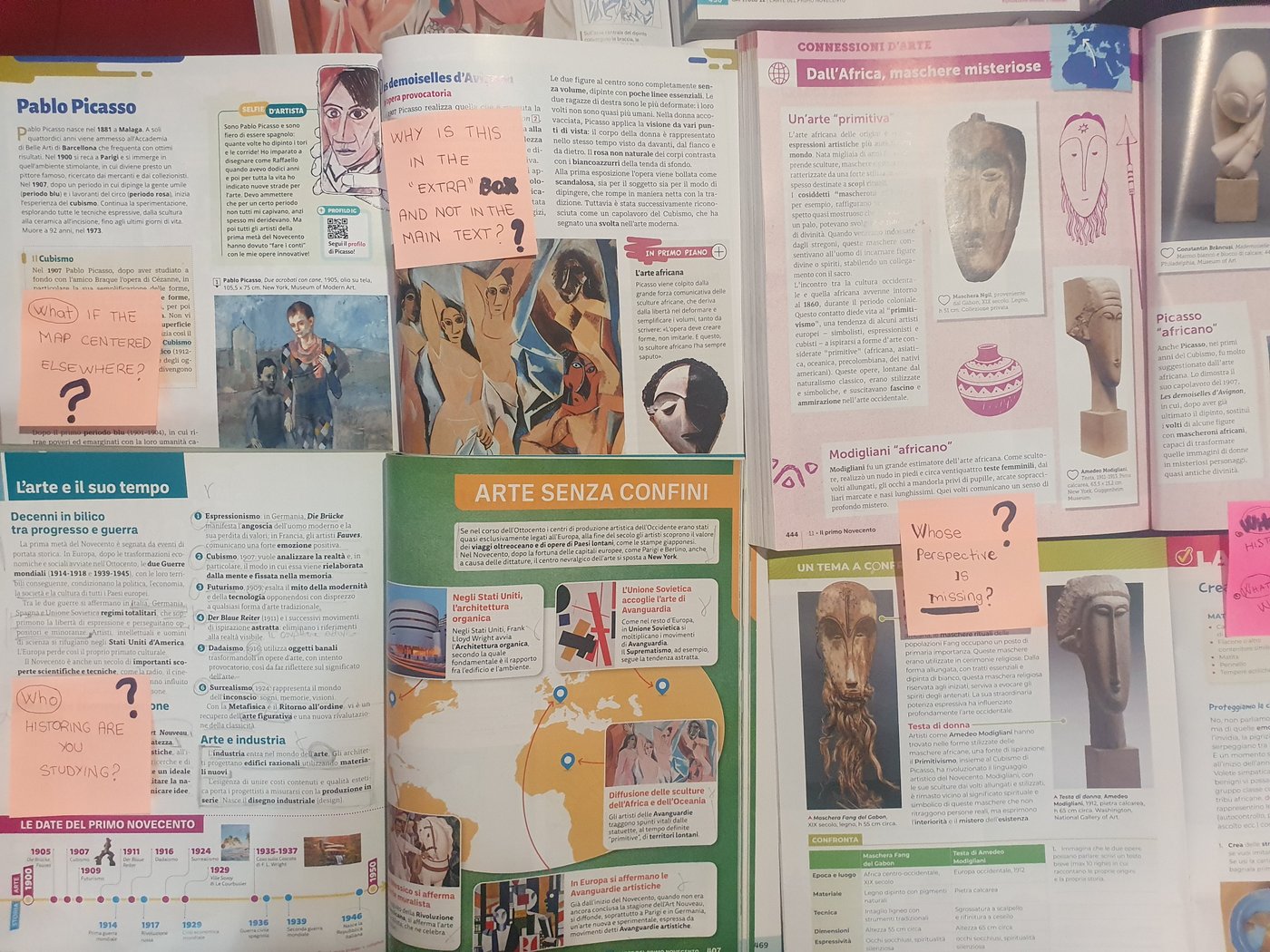
What stories about art do students learn at school? In many Western countries, art history textbooks still focus mainly on Western artists and traditions, often leaving artistic practices from other parts of the world underrepresented. These narratives significantly influence how young people understand art, culture, and global history. This research project examines how art history is presented in textbooks currently used in Italian middle schools, specifically analyzing volumes published between 2018 and 2025 to investigate which cultural perspectives are included and which remain largely invisible.
The study pays particular attention to how Eurocentric perspectives shape narratives of modern and contemporary art and how colonial histories may still influence the selection of artworks. A central goal of the project is to explore how these schoolbooks can be “decolonized,” presenting art history as a global, interconnected field shaped by diverse cultural traditions rather than a single Western-centered perspective. The research asks how teachers, scholars, and publishers can identify hidden forms of exclusion and how alternative narratives might encourage students to think more critically about visual culture. Combining approaches from art history, visual culture studies, and intersectional research, and inspired by the ideas of Paulo Freire, the project investigates how educational materials can promote dialogue and critical reflection.
Through the analysis and comparison of existing textbooks and historical sources, the study will develop new teaching materials that connect artworks to their social and historical contexts. Ultimately, the project aims to support educators and publishers in developing more inclusive and reflective approaches to teaching art history.