AWAI (間 / あわい) – Between Space, Time, and Matter. Contemporary Japanese Art between Material Practice and Ontological Reconfiguration
Dissertation project led by Alexandra Faust, Institute for Art Theory and Cultural Studies
Project start: 1.10.2022
Abstract
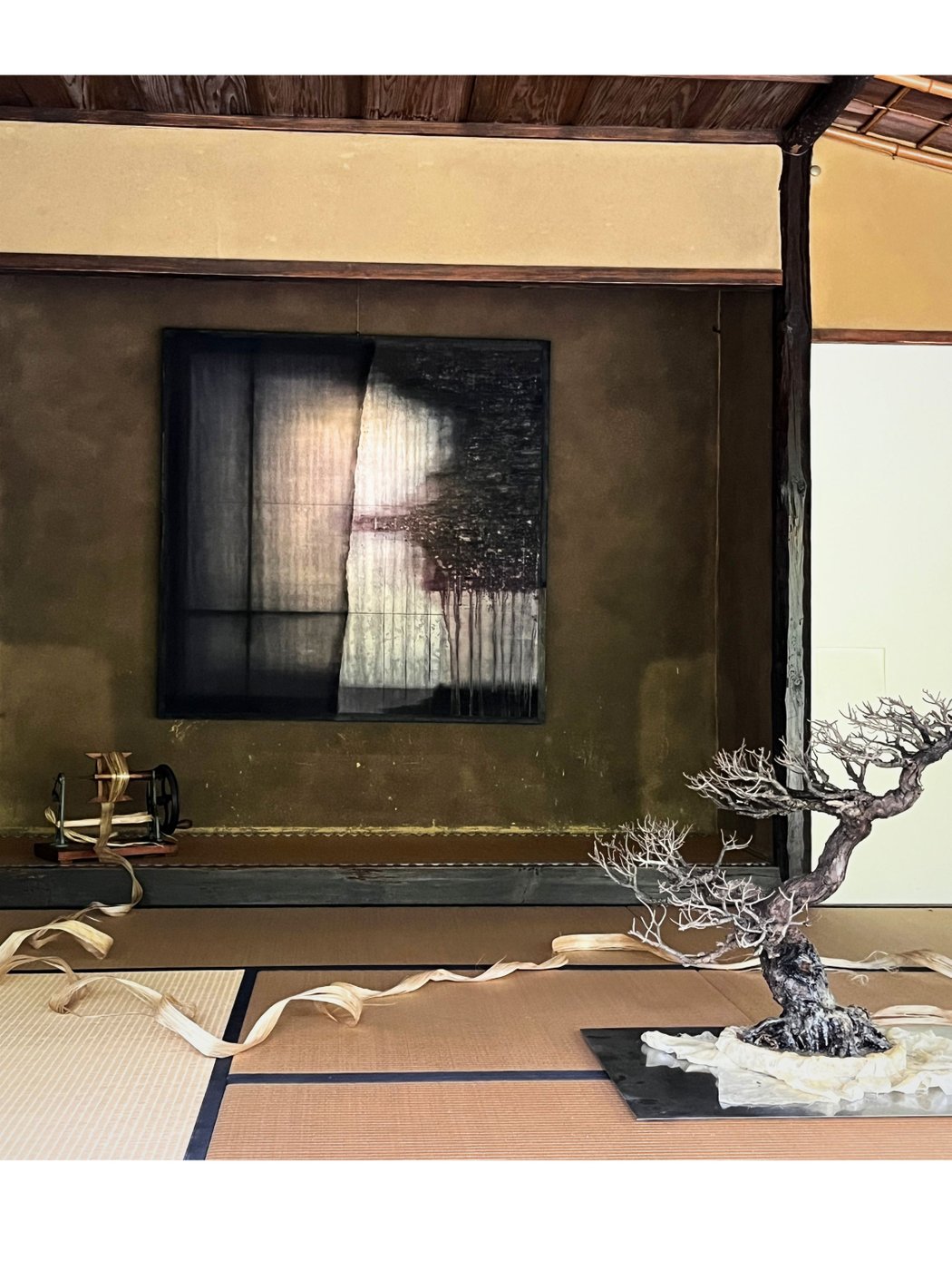
My dissertation investigates a process-oriented and relational understanding of matter, space-time, and energy in contemporary Japanese art. At the center of this study is the Japanese concept of Awai (間 / あわい), which can be described as the “space between things” and conceptualizes matter not as a fixed entity, but as a continuously regenerative and creative form of energy. Within this framework, inspiration and creativity are likewise understood as manifestations of dynamic energy flows emerging within the interplay of space and time. In contrast to dominant narratives of contemporary Japanese art, which are frequently shaped by manga and anime aesthetics, my research focuses on artists who deliberately engage with traditional materials and techniques such as washi paper, kimono silk, and handcrafted natural pigments. By critically recontextualizing and reinterpreting these materials and methods, their practices generate distinct forms of contemporary artistic expression that challenge conventional distinctions between tradition and contemporaneity.
Methodologically, the dissertation is grounded in qualitative data derived from my ethnographic fieldwork in Kyoto, as well as in Karen Barad’s theory of Agential Realism. Through this framework, the study demonstrates that matter, energy, and space-time are not static entities, but phenomena constituted through dynamic relations and interactions. Building on this theoretical foundation, I examine how artistic practices articulate matter and space-time as relational in-between spaces (Awai), thereby challenging established ontological categories and the presumed division between traditional and contemporary Japanese art.
The aim of this dissertation is to contribute new perspectives to the field of contemporary Japanese art studies and to further delineate a still underexplored area within contemporary Japanese art theory. Central to this project is the development of an ontological perspective on artistic practices shaped by the use of traditional materials and methods. This perspective seeks to critically interrogate the dualisms and ontological boundaries embedded within existing discourses on traditional and contemporary Japanese art, and instead to conceptualize both as relationally constituted and mutually entangled phenomena that emerge through continuous and processual transformation.
Short biography
Alexandra Faust studied Cultural Studies, Social and Cultural Anthropology, and Japanese Studies at Humboldt University of Berlin, Kyoto University, and University of Vienna. Her academic research focuses on contemporary Japanese art, aesthetics, and material-based artistic practices.
At the center of her work are questions of space, time, and materiality, as well as their philosophical and cultural implications in-between traditional and contemporary artistic production in Japan. She investigates these questions particularly through fieldwork-based research methodologies conducted in Kyoto.
Within the framework of her doctoral project, she examines the Japanese concept of Awai as a relational in-between space and analyzes its significance for contemporary artistic and theoretical discourses. In doing so, she brings together approaches from art history, philosophy, and Japanese studies.
Alongside her academic work, she curates exhibitions featuring Japanese artists and was involved in the initiation of the Japanese film festival "Japannual" in Vienna. In addition, she works as an actress and dancer, including performances at the Vienna State Opera.