Otto Wagner Lecture 2026: Legacy Russell – Black Meme
BLACK MEME explores the construct, culture, and material of the meme as mapped to Black visual culture from 1900 to present day. Using archival media Russell explores the impact of blackness, Black life, and Black social death on contemporary conceptions of virality borne in the age of the Internet. Offering insight into Russell's ongoing research and work, this lecture will touch on some of the subjects within her book BLACK MEME: A History of Images that Make Us (Verso, 2024). Moderation: Petra Hlaváčková, Nicole Sabella and students of Gender & Space Studio.
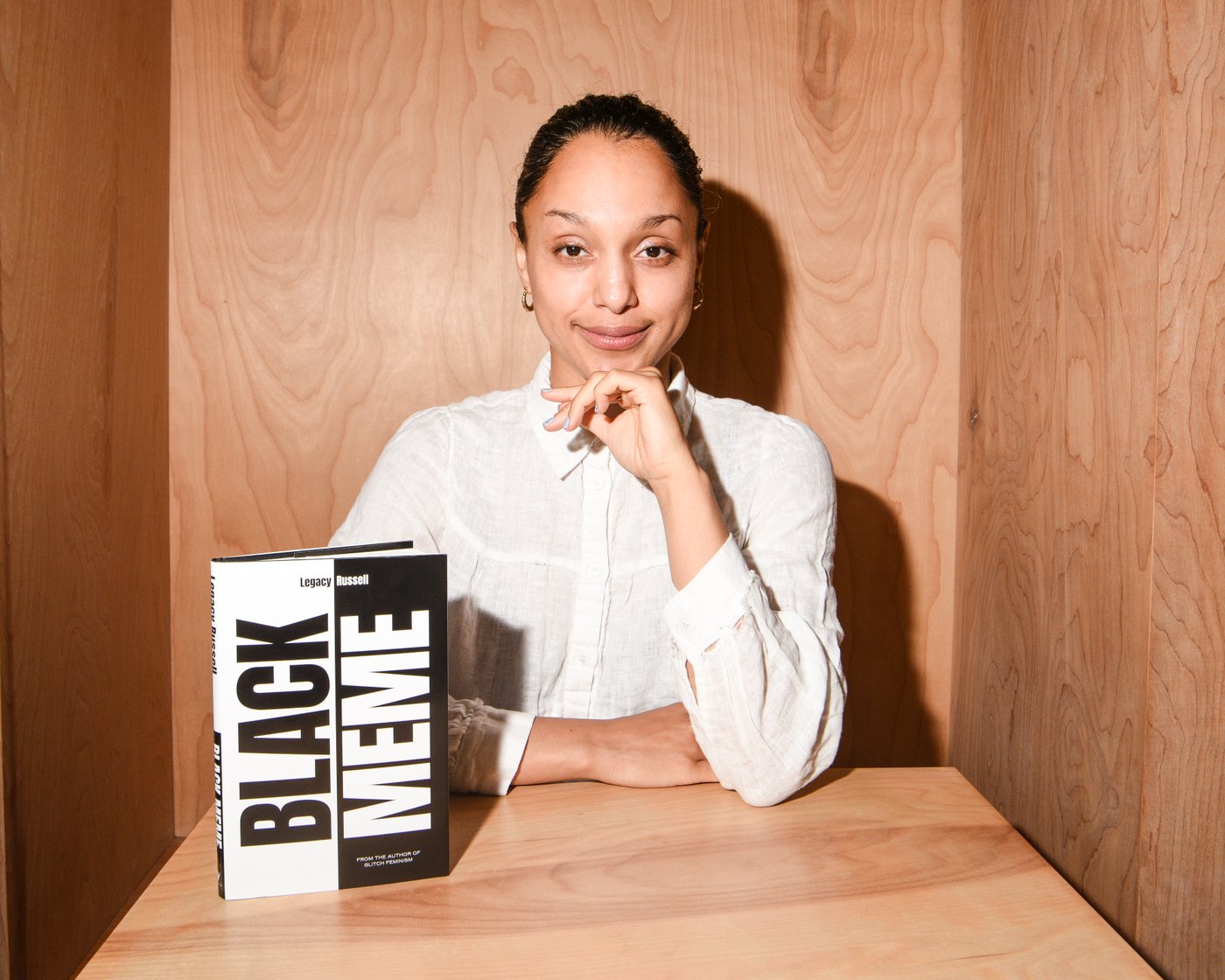
Legacy Russell is a curator and writer. Born and raised in New York City, she is the Executive Director & Chief Curator of the experimental arts institution The Kitchen. Her academic, curatorial, and creative work focuses on gender, performance, digital selfdom, internet idolatry, and new media ritual.
A selection of recent exhibitions include Code Switch: Distributing Blackness, Reprogramming Internet Art (2024-25, The Kitchen, in collaboration with the Schomburg Center and MOCAD) ; Harmony Holiday: BLACK BACKSTAGE (2024, The Kitchen); Matthew Lutz-Kinoy: Filling Station (2023, The Kitchen); Samora Pinderhughes: GRIEF (2022, The Kitchen); satellite projects The Condition of Being Addressable (ICA LA, 2022); The New Bend (Hauser & Wirth, 2022-2023); Sadie Barnette: The New Eagle Creek Saloon and madison moore: Nightlife-in-Residence (2022, The Kitchen) Projects: Kahlil Robert Irving (2021), Projects: Garrett Bradley (2020), and Projects: Michael Armitage (2019), all with The Studio Museum in Harlem in partnership with The Museum of Modern Art; Thomas J Price: Witness (2021); Dozie Kanu: Function (2019), Chloë Bass: Wayfinding (2019), and LEAN with Performa's Radical Broadcast online (2020) and in physical space at Kunsthall Stavanger (2021). She is the recipient of the Thoma Foundation 2019 Arts Writing Award in Digital Art, a 2020 Rauschenberg Residency Fellow, a recipient of the 2021 Creative Capital Award, a 2022-23 Pompeii Commitment Digital Fellow, a 2023 Center for Curatorial Leadership Fellow, a 2024-25 Lunder Institute for American Art Fellow, and a 2025-2026 Obama Leader awardee.
In 2025, Russell was appointed to Mayor-elect Zohran Mamdani's Arts & Culture Transition Committee for New York City in late 2025, bringing her expertise in contemporary art and institutions to help shape NYC's future cultural policy alongside other leading arts figures. Her first book is the critically acclaimed Glitch Feminism: A Manifesto (Verso Books, 2020). Her second book BLACK MEME (Verso Books, 2024) was shortlisted for the 2024 The National Book Critics Circle Award. Russell's first chapbook of poems is GAY POMPEII from GenderFail, published in 2025.
The Otto Wagner Lectures are a highlight of the academic events organized by the Institute for Art and Architecture (IKA). The lecture series gives a platform to speakers from other disciplines and contexts whose outstanding intellectual and/or artistic contributions promote discourse that can inspire and invigorate architectural discussion with novel themes and perspectives. In 2018, the lecture was given by Antonio Negri, who spoke about forms of collective organization with the title A Subject for Europe, in 2019, Vandana Shiva gave a lecture entitled Soil not Oil. The transfer from the age of fossil fuel to the awareness of a living earth, and in 2025, Matthew Gandy lectured on Urban Imaginaries, illuminating utopian and dystopian dimensions to future cities.
Otto Wagner was a professor at the Academy of Fine Arts Vienna from 1894 to 1912. His master class is considered a laboratory of architectural modernism in the 1900s. Here, visionary designs for the architecture of the future were created, whose aesthetics were consistently functional and constructively informed. However, Wagner's modernity and the question of how his work was embedded in the political, philosophical, and scientific developments of modern society remain controversial. Some consider him a pioneer of modernism because of the clear distinction between the architectural elements of both the construction and the surfaces, while others see this formal absolutism as the expression of a humanistic modern architecture that primarily reflects the values and norms of the bourgeoisie and the emerging market economy, but cannot yet be considered part of the avant-garde of the early 20th century. What is undisputed is the influence of architectural modernism that emanated from Otto Wagner's oeuvre