Congratulations: Awards for Scholarly Works 2025/26
The Awards for Scholarly Works 2025/26 goes to Hannah Katalin Grimmer for her dissertation (IKW). The 3 (!) Honorary Awards go to: Franzis Kabisch for her dissertation (IKW), Jasemin A. Khaleli for her master-thesis (Master in Critical Studies) and Doris Leitner for her final thesis (IKR). Congratulations!
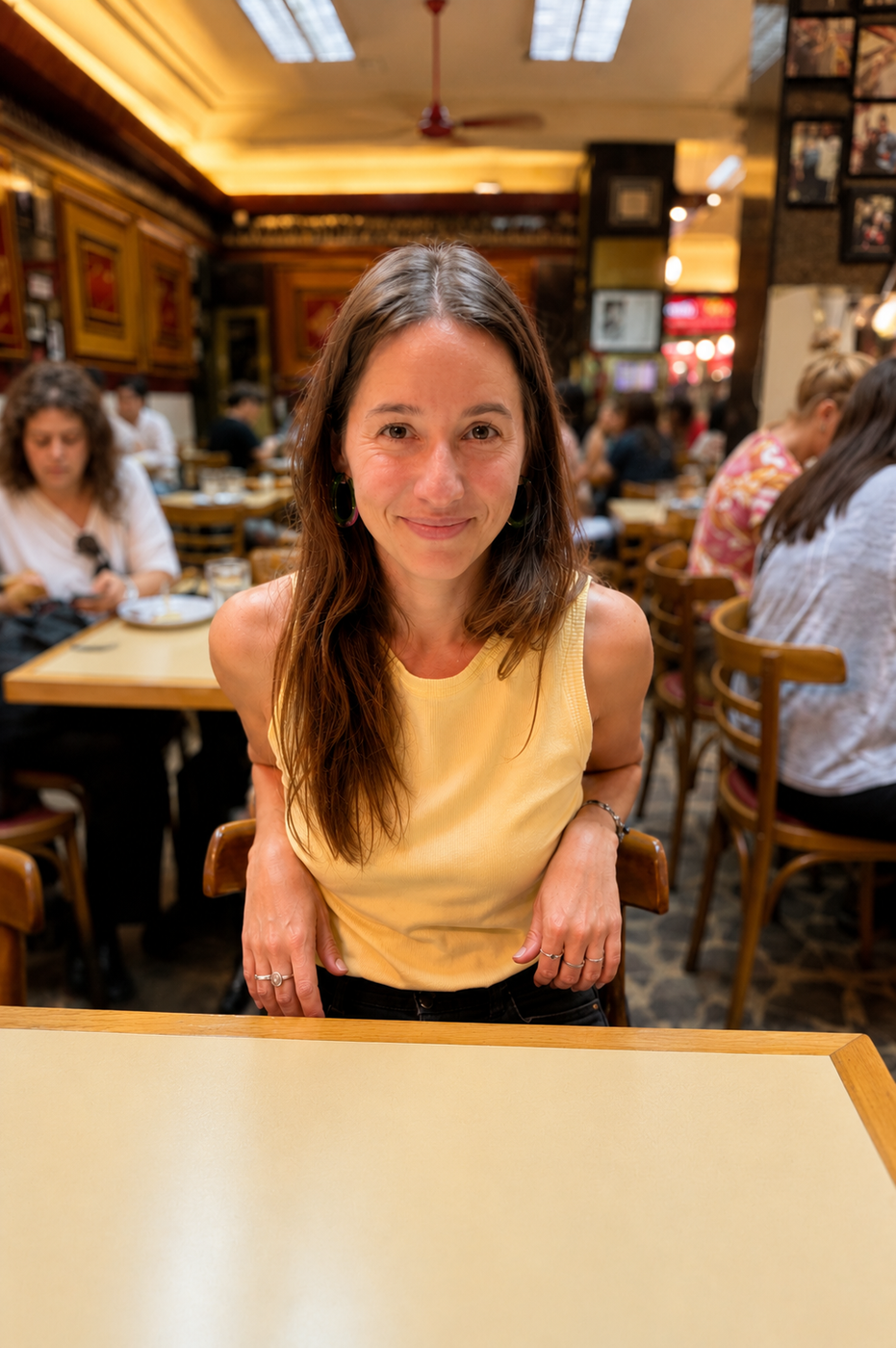
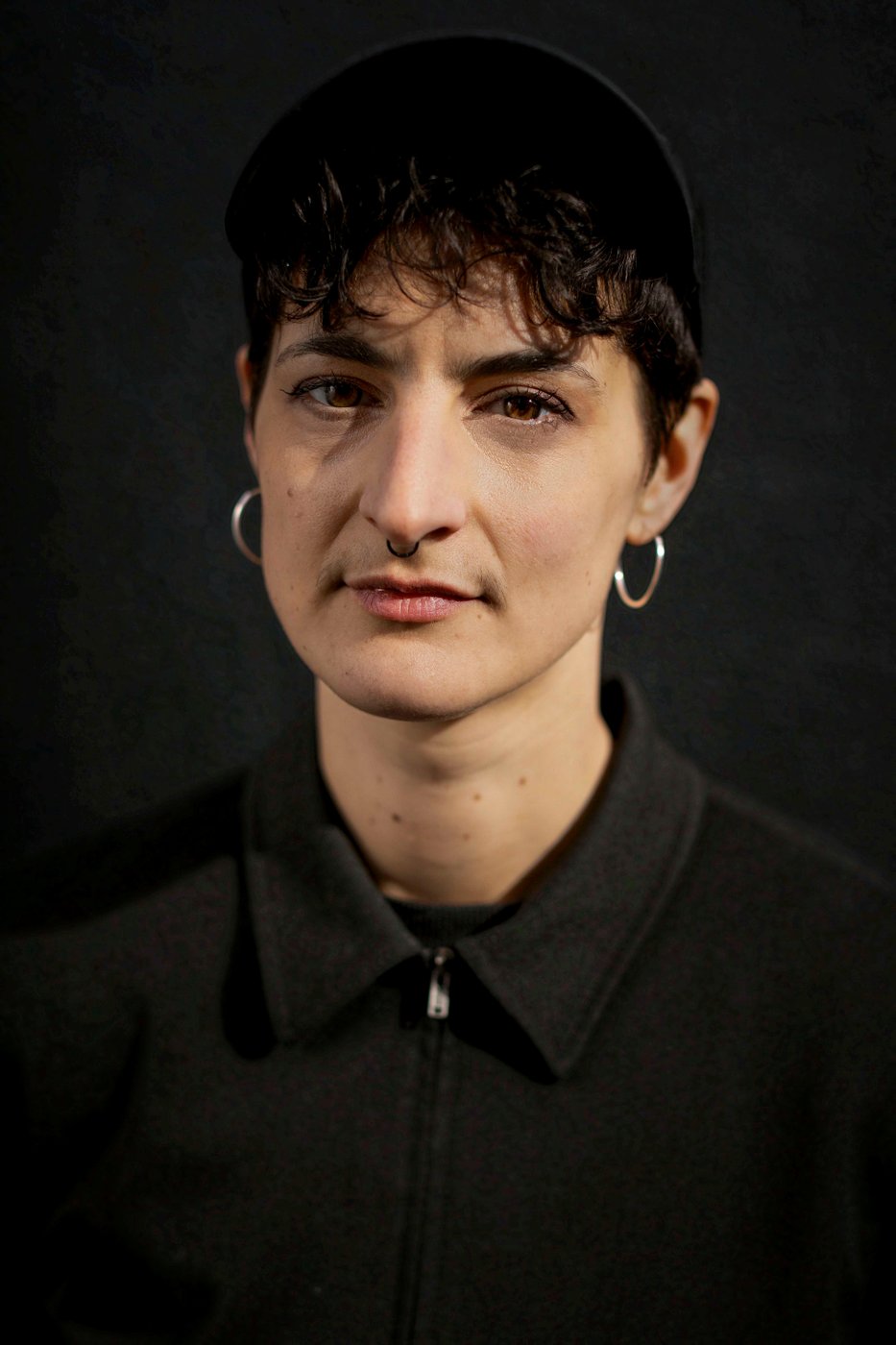


Hannah Katalin Grimmer
El arte del porvenir. The Art of Worlds to Come. Artistic Activism and Resisting Memory in Chile
What remains when a dictatorship ends? In Chile, the past did not simply come to an end, it continues to shape the present as a structural force. Dictatorship and post-dictatorship are not treated as closed historical periods, but as historical continuities.
At the core are three guiding motifs rooted in social movements: No+ [No more], Somos+ [We are more] and Dignidad [Dignity]. These motifs appear in various forms, including murals, stencils, paste-ups, photographs, paintings and performances, and persist over time. In order to analyse the significance of art and its audiences, the study introduces the methodological concept of “remediated presencing”, which describes how artistic practices reactivate, remediate and recontextualise motifs and symbols in transtemporal processes across different media.
The dissertation demonstrates how, by acting as memory agents, artists can disrupt the percepticide, the control of perception imposed by the dictatorship, and envision a porvenir: a world yet to come. The study contributes to our understanding of visual culture as a resisting form of memory work. At the intersection of art theory and cultural studies, it establishes a dialogue between Anglo-European Memory Studies and Latin American Estudios sobre memoria.
Jury statement:
This dissertation deals with the entanglements of art, activism, and memory in Chile between 1964 and 2023. The work operates at the interface of art theory, cultural studies and memory studies. The interlocking of these three areas in terms of content and methodology as well as the impressive, intensive and knowledgeable examination of artistic protest movements in Chile is unique for the German-speaking discourse. Hannah Katalin Grimmer's dissertation shows in an outstanding way how visual culture is used by activists as a resistant form of remembrance work in a politically effective way.
Franzis Kabisch
Plot Twist Abortion — Images, Narratives, and Discourses on Abortion in German-Language Film and Television
What image do we have of abortion? What stories do we tell ourselves about it? And what shapes our view of it? The dissertation Plot Twist Abortion examines socially pervasive images, stereotypes, and narratives surrounding abortion and traces their origins in (pop) cultural media.
The focus is on a critical analysis of German and Austrian films and TV series—from daily soaps like Gute Zeiten Schlechte Zeiten and crime dramas like Tatort to medical dramas like Der Bergdoktor or festival hits like 24 Wochen. The analysis examines not only the abortions themselves, but also the decision-making process leading up to them and the consequences that follow: What conflicts are portrayed, and at whose expense? Which perspectives are prioritized, and whose feelings take center stage?
Detours into related discourses—on the history of abortion films in the Weimar Republic or the growing visualization of the fetus over the course of the 20th century—demonstrate how visual anti-abortion prejudices have developed and continue to contribute to social stigmatization.
Finally, the dissertation asks what kinds of images could exist instead. Do we need “positive” or “realistic images” of abortions? What would these look like? And what role does our own perspective play in this? Do we always see only the “poor others,” or can we also imagine ourselves in these stories?
Jury statement:
Franzis Kabisch's dissertation examines visual representations of abortions in film and television in Germany and Austria between 1990 and 2020. The work convinced the jury by the impressive scope of the material examined as well as by the clear structure and language. In six chapters, the author analyzes stereotypes of representation in relation to abortion and devotes herself in depth to topics such as archival material, decision-making conflicts, familist dispositives, aesthetics of deterrence, and possible alternatives. Kabisch problematizes the stereotypes with reference to feminist-oriented studies of visual culture as well as research in queer studies, thus impressively questioning a widespread understanding of visibility.
Jasemin A. Khaleli
On Moving Spaces and Bodies Lost. Affective Resonances in the Vienna Phonogrammarchiv
Moving a sound archive after nearly a century in the same location is not only a logistical challenge; it also renders the archival body itself, along with its sediments of histories and structures of violence, open to critical questioning. The site of this study is the Vienna Phonogrammarchiv (Austrian Academy of Sciences), founded in 1899 and considered the oldest archive for scientific sound recordings today. In On Moving Spaces and Bodies Lost, the archive–also the author’s workplace over several years–is subjected to a phenomenological and ethnographic investigation.
The study examines how certain (body-)constellations and materials became part of the archive, while other encounters were excluded, or refused. Through a series of writing experiments, the study seeks to render visible those often unmarked and unquestioned practices that have produced the traditional interpretive distances between (predominantly male) researchers and their objects of study, and to articulate a critical practice that counters colonial extractivisms and their feverish dreams. Drawing companionship from authors such as Sara Ahmed, Saidiya Hartman, George Perec and Ann L. Stoler, the study develops three distinct writing approaches.
Begründung der Jury:
Jasemin Khaleli untersucht in ihrer Masterarbeit im Studiengang Critical Studies das Phonogrammarchiv Wien als einen Ort der Verwahrung, an dem materielle, räumliche und epistemische Dimensionen archivischer Gewalt fortbestehen. Mithilfe der im Archiv selbst verankerten Medien und Dokumentationspraktiken macht sie die vielfältigen Bewegungen und Manifestationen archivischer Gewalt sichtbar und analysierbar. Über die ethnographisch beobachtende Begleitung des Umzuges des Archivs, aber auch zeichnerisch und fotografisch formuliert sie in ihrer Arbeit einen innovativen Zugang zu den materiellen und institutionellen Bedingungen, unter denen sich Gewalt in und durch Archive manifestiert.
Doris Leitner
Ein Ensemble aus Papier und Geschichte. Restauratorische Untersuchung und Werteanalyse eines Klebealbums mit barocken Handzeichnungen aus der Sammlung des Kupferstichkabinetts der Akademie der bildenden Künste Wien
Scrapbooks are heterogenous collection objects of various appearances and origins. The present thesis examines a special example: an album containing mounted Baroque hand drawings by various artists, which was created in Absam in Tyrol (Austria), in the early 19th century.
The methodology applied in this work combines visual and scientific examinations including imaging techniques. These are complemented by a value assessment and a literature-based contextualization.
The central concern is the question of what conservation insights can be gained for the development of a sustainable conservation strategy. The focus lies on the construction method and the material changes in order to understand the creation and the history of the object. This research enables a value-based analysis of the album and its historical functions.
Investigation reveals this album as a multi-layered ensemble consisting of a cover, a book block, 63 mounted drawings and various reworkings. The moment of assembly marked a turning point at which the individual components became part of a new, inseparable work.
This thesis emphasizes the necessity of evaluating and appreciating the scrapbook as an ensemble. Knowledge of the original use and all changes forms the essential basis for a value-based consideration of the object, leading to the development of an adequate conservation concept. This underlines the importance of scrapbooks as historical and cultural artefacts and advocates for their preservation in their entirety.
Jury statement:
Doris Leitner's diploma thesis convinces with its exceptional scientific and restoration quality. Particularly noteworthy are the methodologically stringent combination of restoration investigation, material technology analyses, art-historical contextualization and value-based preservation strategy, as well as the interdisciplinary approach. The work makes an independent and sustainable contribution to conservation and restoration research and is characterized by high professional precision, careful documentation and immediate practical relevance. It is therefore a highly outstanding thesis.